


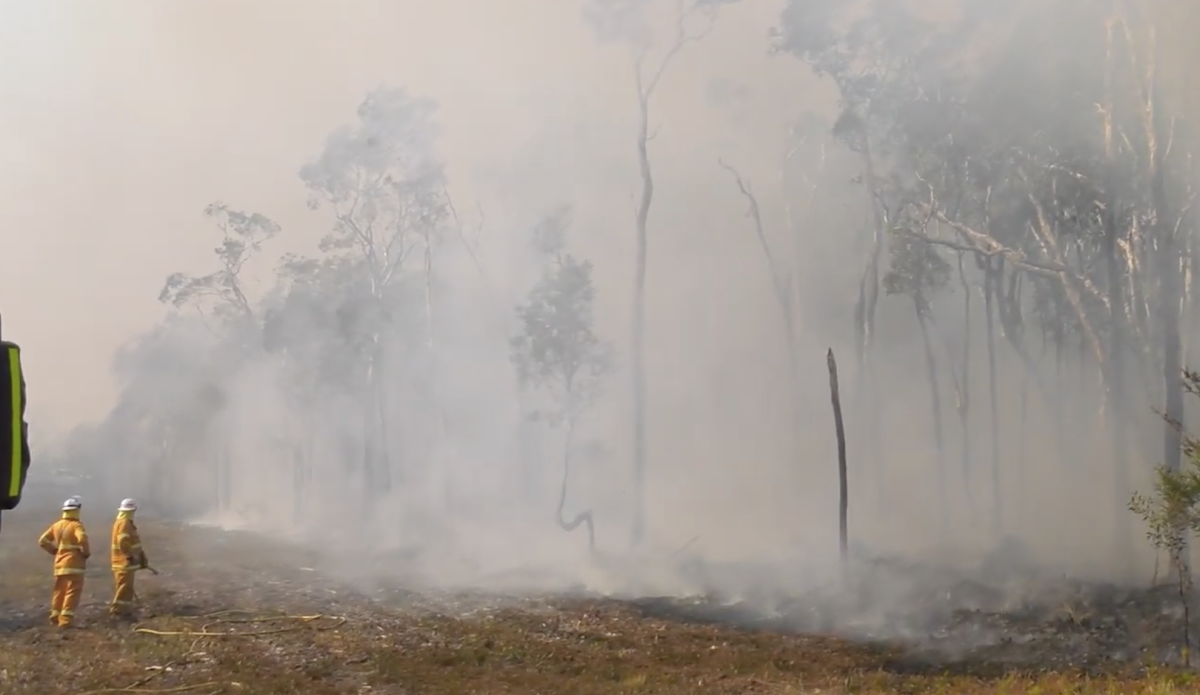
Residents across Moreton Bay are waking to smoke drifting over suburbs as planned burn-offs begin across bushland areas, with fire crews lighting controlled fires to reduce the threat of bushfires before peak season. From Bribie Island to Upper Caboolture, these managed burns are already affecting nearby communities, with smoke expected to hang in the air for days even after flames are extinguished.
The burns began with activity recorded around April 15 and continuing through April 16, according to local authorities. Crews carried out operations in areas including Bribie Island, particularly near Mermaid Lagoon, as well as Upper Caboolture, while new sites such as Albany Creek were scheduled to follow as conditions allowed.


Smoke spreads beyond burn zones into nearby suburbs
While the fires are controlled, the effects are not limited to the burn sites themselves. Smoke from operations near Banksia Beach has been reported drifting into nearby areas such as Toorbul and Sandstone Point, affecting visibility and air quality. Authorities have advised residents, especially those with respiratory conditions, to stay indoors and keep windows and doors closed when smoke is present.
Even after a burn is completed, crews continue to patrol and monitor the area for several days to ensure the fire remains contained. This means some suburbs may continue to experience smoke or restricted access beyond the initial burn period.

Moreton Bay hazard reduction burns: affected suburbs and status
| Suburb / Area | Burn Status | Community Impact |
| Bribie Island (Banksia Beach) | Completed / Recent | Smoke lingering, monitoring ongoing |
| Upper Caboolture | Completed / Recent | Possible residual smoke, patrols in place |
| Albany Creek | Scheduled / Likely underway | Possible smoke if conditions met |
| Toorbul | Indirect impact | Smoke drift reported from nearby burns |
| Sandstone Point | Indirect impact | Smoke drift affecting area |
| Bellara | Planned | Future burn, timing dependent on weather |
| Burpengary | Planned | Future burn, no fixed schedule |
| Caboolture | Planned | Future burn, no fixed schedule |
| Deception Bay | Planned | Future burn, no fixed schedule |
| Griffin | Planned | Future burn, no fixed schedule |
| Mount Glorious | Planned | Future burn in bushland areas |
| Ningi | Planned | Future burn, timing to be confirmed |
| Whiteside | Planned | Future burn, no fixed schedule |
| Woodford | Planned | Future burn, rural bushland areas |
No fixed schedule as weather dictates next burns
Although more than a dozen additional burn sites have been identified across Moreton Bay, including Burpengary, Deception Bay, Griffin and Woodford, there is no set timetable for when each location will be treated. Authorities rely on specific weather and environmental conditions before lighting any fire, meaning plans can shift quickly.
Burn season typically runs from March to August, but officials note that operations can take place at any time of the year if conditions are safe. This flexible approach is designed to ensure each burn can be carried out with minimal risk to surrounding communities.

Balancing fire prevention with environmental care
Officials say the burns play a key role in reducing fuel loads such as dry leaves and fallen branches, which can feed dangerous bushfires during hotter months. At the same time, the process is managed to protect local wildlife and vegetation.
Before each burn, teams assess the site to identify sensitive habitats and species. Measures such as clearing around trees and monitoring wildlife during the burn are put in place. The use of aerial incendiary drones has also been introduced to help crews ignite fires more precisely, particularly in hard-to-reach terrain.
Authorities say these planned burns also support the natural cycle of some native plants, which rely on fire or smoke to trigger growth and seed release, helping maintain the region’s biodiversity.
Published 20-April-2026


CLICK ANY LOGO TO SEE PUBLICATION