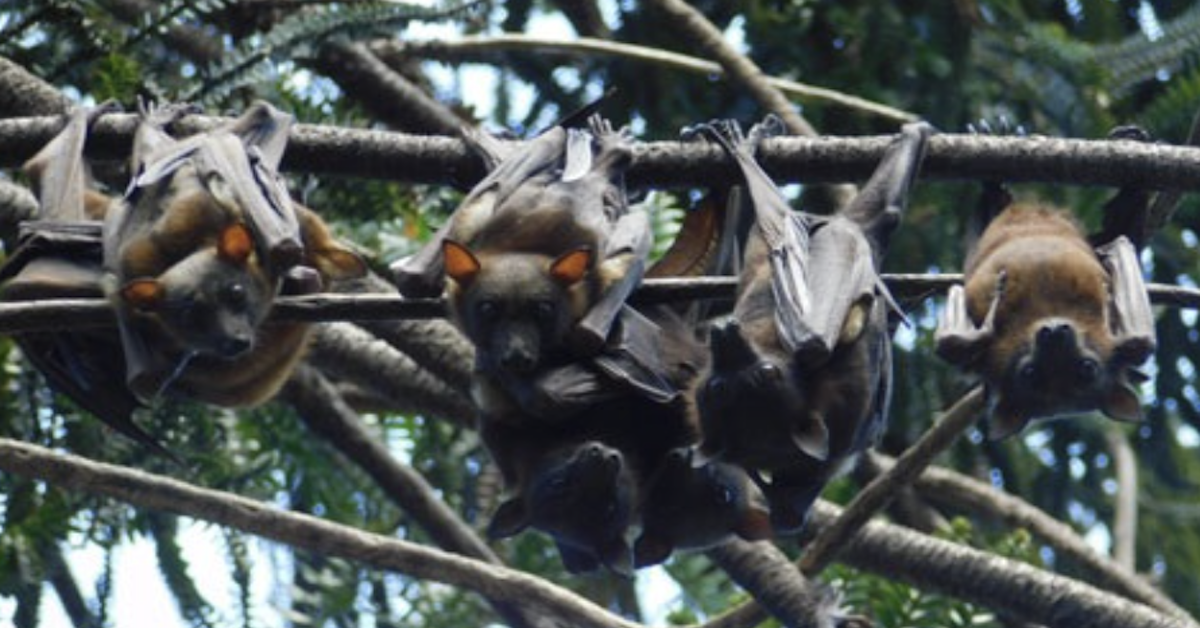




The flying fox colony beside New Settlement Road in Narangba has grown to almost 16,000 animals, more than twice the number recorded in April as Council considers a longer-term approach to managing the roost near homes.
City of Moreton Bay’s latest published count puts the colony at 15,866 flying foxes on 21 July, up from 6,380 on 14 April.
That is an increase of 9,486 animals, or about 149 per cent in just over three months.
The rise comes as the outcome of consultation over a proposed canopy-mounted sprinkler system remains publicly unresolved. Residents were asked about the idea early this year, but Council’s project page still says feedback is being reviewed before a proposed direction is presented to Council.
Numbers Climb Through Autumn and Winter
Council’s monitoring shows the colony growing across each of its four counts from April to July.
There were 6,380 flying foxes recorded on 14 April, rising to 8,316 on 26 May and 12,060 on 22 June. By 21 July, the estimate had reached 15,866.
Most of the increase came from grey-headed flying foxes. Their numbers rose from 3,828 in April to 12,693 in July. Black flying foxes increased more modestly, from 2,552 to 3,173.
No little red flying foxes were recorded at the Narangba roost during those four counts.
The figures are snapshots rather than a fixed population. Flying foxes are highly mobile and numbers at individual roosts can change as animals move between locations.
A Neighbourhood Issue Since 2021
Council says concerns about the New Settlement Road colony have been raised since 2021, particularly around noise, odour and droppings, with active management of the site underway since 2022.
Work to date has included trimming and lopping trees to increase separation between the colony and houses. Trees have also been planted elsewhere within the parkland to encourage roosting farther from homes.
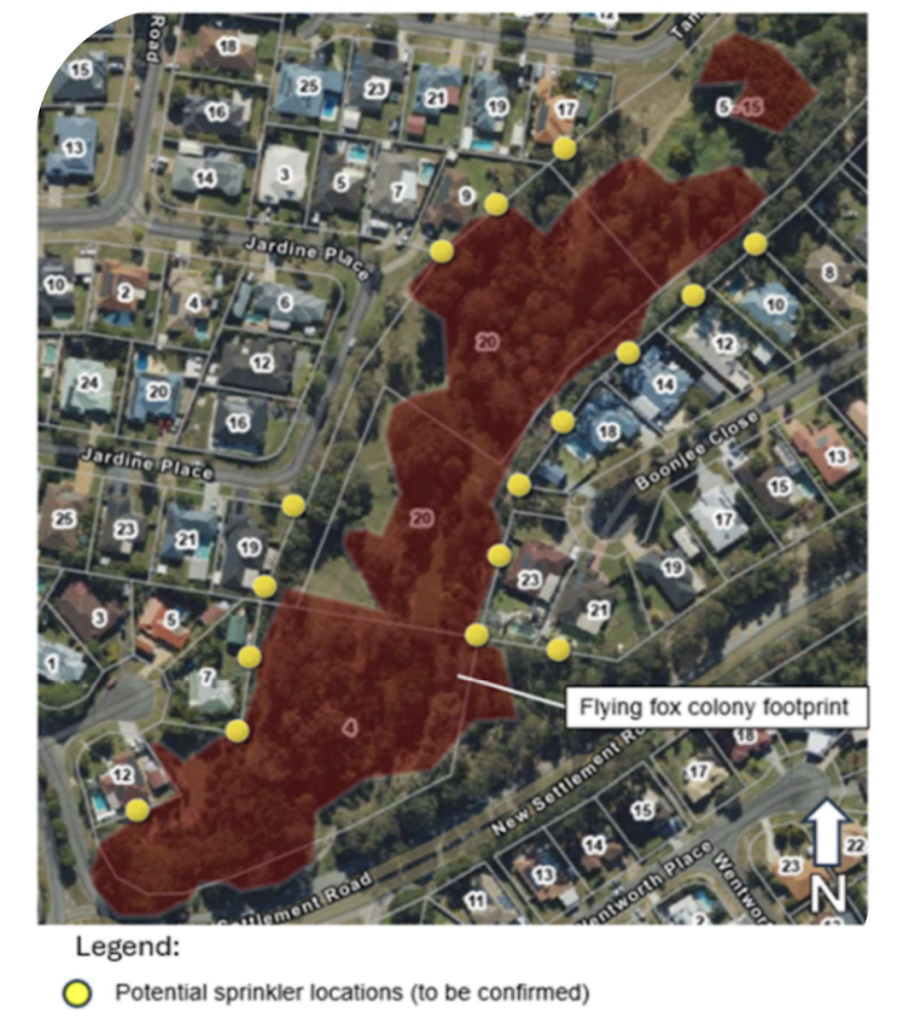
Earlier this year, Council investigated another option: oscillating sprinklers mounted in selected trees along the residential edge of the colony.
The proposed system would periodically spray water into parts of the canopy while flying foxes were present, making those particular trees less attractive for roosting.
Importantly, the proposal was not designed to remove the colony from Narangba. Its purpose was to encourage the animals to shift within the parkland and create more distance between the roost and neighbouring houses.
Sprinkler Proposal Still Awaiting an Outcome
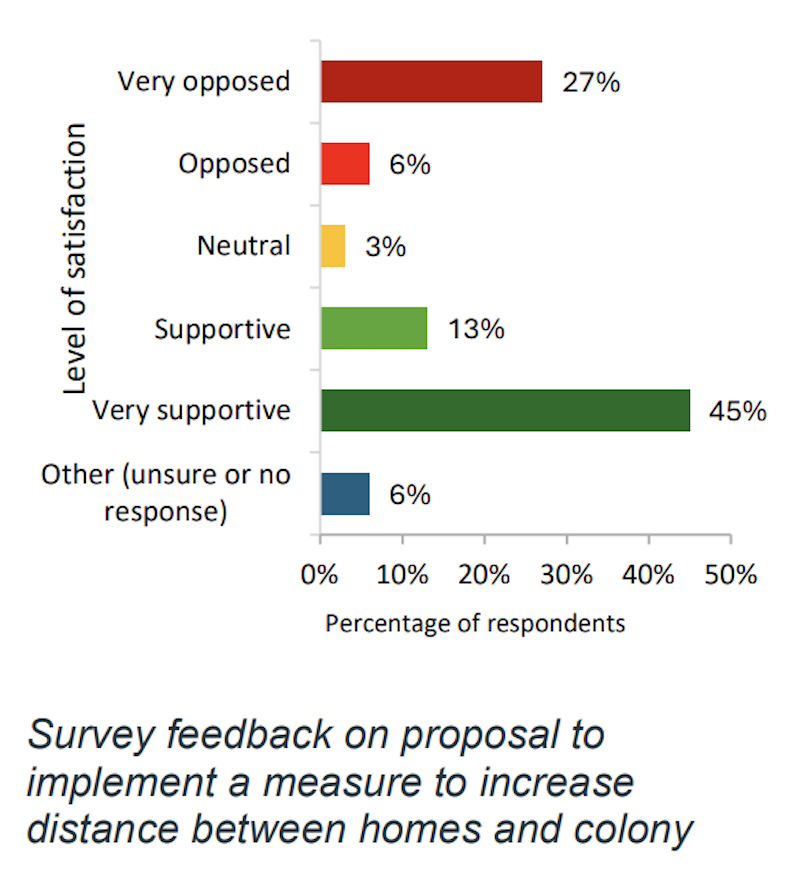
Consultation ran from 12 January to 6 February, with Council publishing its summary report in March.
The results showed 58 per cent of respondents supported or strongly supported increasing the separation between houses and the colony. Among residents living immediately beside the parkland, support was 63 per cent.
Several months later, Council has not published a final decision on whether the sprinkler proposal will proceed.
Its project page says Environmental Services is reviewing the feedback to finalise a proposed direction for the Narangba colony and flying fox management more broadly across the city. That approach is to be presented to Council, with timeframes and next steps to be released after final decisions are made.
The Narangba consultation is now listed among Council’s past environment projects, where it carries a last-update date of 16 April 2026.
There is currently no published indication on the project page that the sprinkler system has been approved or installed.
Increased Separation Needed
The sharp rise in flying fox numbers does not, by itself, indicate whether the proposed management approach would be effective.
Council has made clear that success for the sprinkler system would be measured by increasing the separation between the colony and houses, rather than reducing the number of flying foxes.
For nearby residents, however, the latest count puts a new scale on an issue that has been running for years.
The colony numbered 6,380 in April. By July, Council’s estimate had reached almost 16,000. What remains unclear is whether the sprinkler proposal residents were asked to consider earlier this year will become part of Council’s longer-term response.
Published 31-August-2026