



PsiQuantum Breaks Ground on Utility-Scale Quantum Computer at Petrie

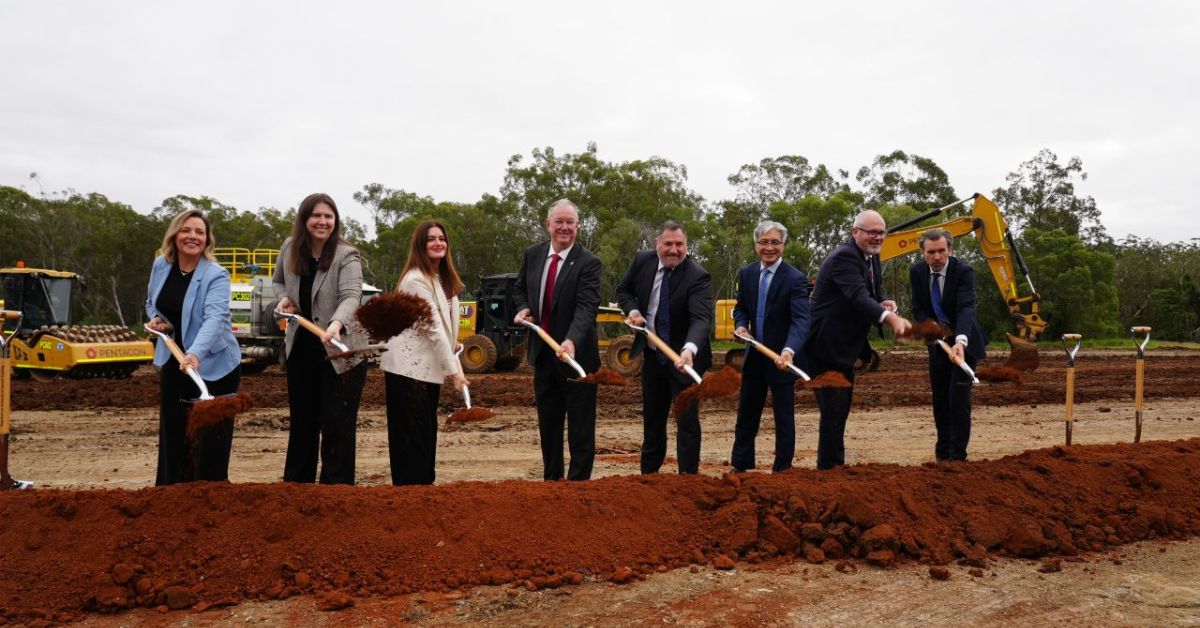
PsiQuantum has broken ground at Moreton Bay Central in Petrie, officially beginning construction of what the company describes as the world’s first utility-scale, fault-tolerant quantum computer on a site that once housed one of Queensland’s largest paper mills.


Construction began on 17 June, with the project backed by approximately $940 million in combined investment. It positions Moreton Bay Central as PsiQuantum’s Asia-Pacific headquarters and places the region at the centre of one of the most ambitious technology construction projects in the country’s history.

The potential impact of quantum computing

Fault-tolerant quantum computers operate on fundamentally different principles from conventional computers. Where today’s machines process information as binary bits, quantum systems use quantum bits, or qubits, that can exist in multiple states simultaneously, enabling certain classes of problems to be solved at a scale and speed no classical computer could approach.
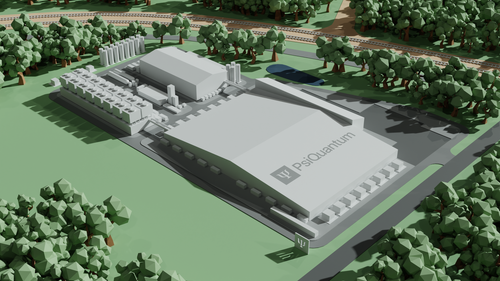
Photo Credit: PsiQuantum

The applications researchers expect to unlock include breakthroughs in drug discovery, materials science, energy systems, logistics optimisation, financial modelling and agricultural science. The qualifier “utility-scale” matters: it describes a machine powerful and reliable enough to tackle real-world commercial and scientific problems rather than laboratory demonstrations. No such machine exists yet anywhere in the world.
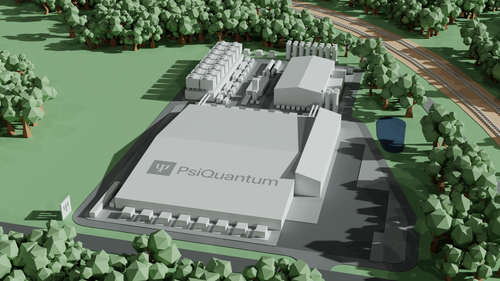
Photo Credit: PsiQuantum

“For decades, quantum computing has held the promise of transforming what humanity can achieve through computation,” said PsiQuantum Interim CEO Victor Peng at the groundbreaking. “Today in Australia we are beginning to turn that promise into reality.”

How PsiQuantum is building it

PsiQuantum’s approach is photonic, using particles of light rather than superconducting circuits or trapped ions to carry quantum information. The practical advantage of photonics is that it operates closer to room temperature in some components and can leverage existing semiconductor manufacturing techniques used to produce optical chips.

The facility’s central piece of infrastructure is a cryoplant ordered from Linde Engineering in late 2024, which will cool critical quantum components to near absolute zero. It will be one of the largest cryoplants ever constructed for quantum computing. Delivery is scheduled for the second half of 2027, after which PsiQuantum will commission the system before accepting cryogenic cabinets filled with photonic quantum chips networked via standard optical fibre.

The system at Moreton Bay is expected to be operational in 2029, pushed back from the original 2027 target that was announced when the project was first revealed in April 2024.

The site that made this possible

PsiQuantum originally planned to build the facility at Brisbane Airport, but relocated to Moreton Bay Central after identifying the Petrie site as better suited to the project’s power, utility and infrastructure requirements.
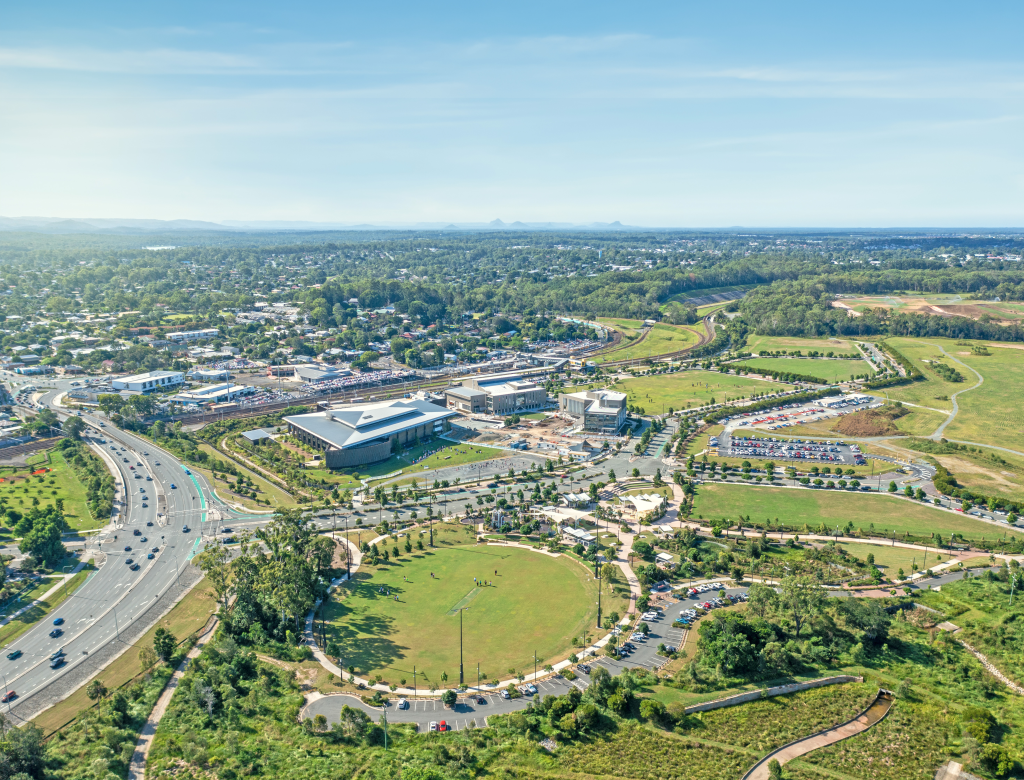
Photo Credit: PsiQuantum

The former Petrie Paper Mill had operated at industrial scale for decades, giving the site the heavy-duty services infrastructure that quantum computing at this level demands. New energy infrastructure commissioned ahead of the 2032 Olympic precinct development at the site has added further capacity.

Robert Lindwall, PsiQuantum’s head of Australian operations, described Brisbane Airport Corporation as a constructive early partner and thanked the airport precinct for its support before the project found its permanent home.

Building the ecosystem around it

A month before the Petrie groundbreaking, PsiQuantum opened its Test and Validation Lab at Griffith University‘s Nathan campus, including a high-powered cryogenic system to test photonic quantum chips and sub-systems. That facility is where the components for the Moreton Bay machine are being developed and refined before going into the main system.

The co-location of the Test and Validation Lab at Griffith, the TAFE Centre of Excellence at Moreton Bay Central and the USC Moreton Bay campus reflects a deliberate plan to build not just a machine but a regional quantum ecosystem, with research, training and manufacturing capacity growing alongside the hardware itself.

Jobs across engineering, technical operations, advanced manufacturing, research and professional services are expected to be created at the Petrie site as construction progresses.

For more information on PsiQuantum and the Moreton Bay Central project, click here.


Published 22-June-2026
Petrie Set To Host One of the World’s Most Advanced Computing Projects

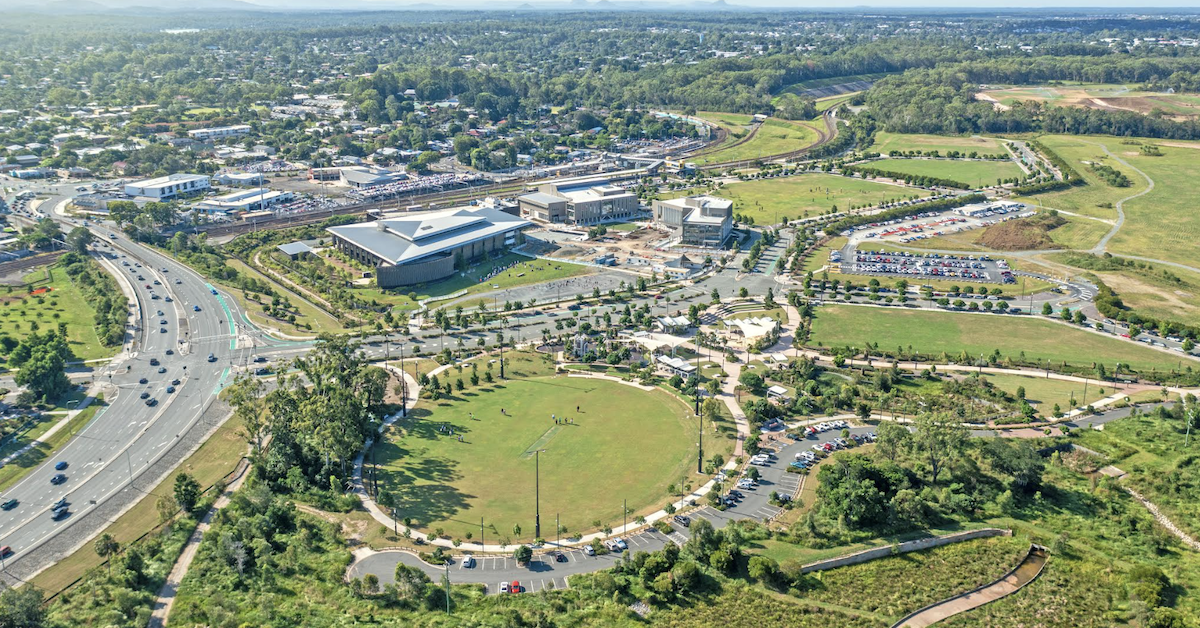
A suburb better known for its university campus and train station is now being linked to one of the biggest technology projects on the planet, with Petrie selected as the future home of PsiQuantum’s planned utility-scale quantum computer and Asia-Pacific headquarters.


The project, backed through partnerships involving PsiQuantum, the City of Moreton Bay and the Queensland and Federal governments, is expected to be built at Moreton Bay Central in Petrie. The proposed site sits beside the University of the Sunshine Coast’s Moreton Bay campus, an area that has steadily grown into a centre for education, research and new industry.

A Global Technology Race Lands In Moreton Bay

Quantum computing has been described by researchers as the next major leap in computing power, with the potential to solve problems that current supercomputers would struggle to process. PsiQuantum is among a small group of companies worldwide working to build a machine capable of operating at a large commercial scale.

The Australian project forms part of a broader push to strengthen the country’s role in advanced technology and manufacturing. The company’s earlier plans centred on Brisbane Airport before attention shifted north to Petrie and the Moreton Bay region.

In statements released by the City of Moreton Bay and PsiQuantum, both organisations pointed to Petrie’s growing infrastructure, transport access and links to education and research institutions as major reasons behind the move.

The project still needs to pass Council approval and land processes before construction can move ahead. If approved, the project would place Moreton Bay alongside a short list of international locations connected to the global race to build practical quantum computers.

Petrie’s University Precinct Draws International Attention

The choice of Petrie reflects how quickly the area around Moreton Bay Central has changed over the past decade. Once dominated by former paper mill land, the precinct now includes university facilities, commercial developments and expanding transport links connected to Brisbane’s northern corridor.

The University of the Sunshine Coast’s Moreton Bay campus has become one of the region’s fastest-growing education sites, with local leaders hoping the quantum computing project could help create stronger pathways between universities, research groups and private industry.

The development could help attract advanced manufacturing businesses and specialist suppliers into the region over time.

PsiQuantum has also signalled plans to work alongside Australian universities and researchers as the project develops. The company previously partnered with government agencies and academic institutions during earlier phases of its Australian expansion.

Jobs, Construction And Long-Term Growth For Locals

Local leaders believe the development could reshape employment opportunities across Moreton Bay over the coming years, particularly in engineering, construction, advanced manufacturing and technology.

Statements from Moreton Bay Mayor Peter Flannery described the proposal as one of the largest technology projects ever connected to the region, with expectations it could support thousands of skilled jobs both during and after construction.

While many of the long-term technical roles would require specialised training, large infrastructure projects of this scale also tend to create demand across local businesses, hospitality, transport and support services.

Australia’s Quantum Industry Continues To Expand

Quantum computing has become an increasingly competitive global industry, with governments and private companies investing heavily in research centres, chip manufacturing and specialist talent.

A Queensland Government statement confirmed significant state and federal support connected to PsiQuantum’s Australian operations, reflecting growing interest in keeping high-level technology development within Australia.

Industry experts believe quantum systems could eventually assist with medical research, logistics, climate modelling, cybersecurity and energy systems, although large-scale commercial use is still years away.


Publidhrf

Pultron Composites to Base New HQ Next to UniSC Moreton Bay Campus


A New Zealand advanced manufacturer is set to build its Australian base beside the UniSC Moreton Bay campus in Petrie after winning the City of Moreton Bay’s $1 million Ultimate HQ competition, a prize package aimed at bringing more skilled jobs and investment into the local community.


Headquarters Set for Moreton Bay Central Near UniSC

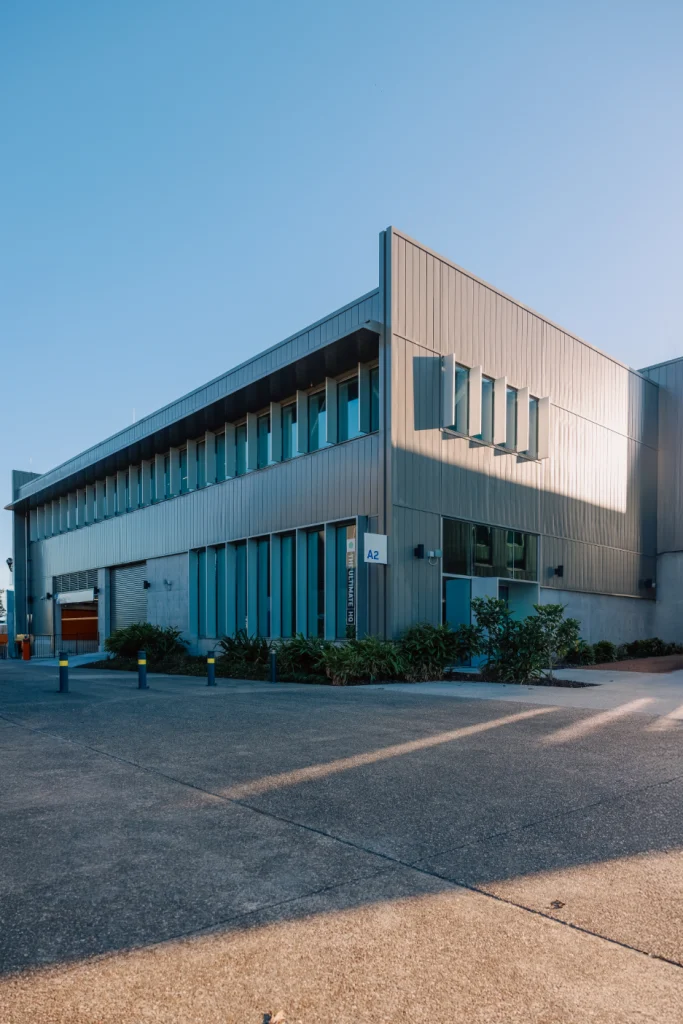
On 4 March 2026, the City of Moreton Bay announced Pultron Composites as the winner of the Ultimate HQ headquarters package, with the new base to be established at Moreton Bay Central next to the UniSC Moreton Bay campus. The precinct has been described as a place built to connect businesses with researchers, students and facilities in a growing education-and-industry hub.

Photo Credit: The Ultimate HQ

The prize includes five years of rent-free headquarters space, a $250,000 contribution towards a fit-out and professional support from partners including BDO, Constant Contact, K&L Gates, Telstra, Westpac and Innovate Moreton Bay.

Pultron Composites is an advanced manufacturer specialising in corrosion-resistant composite technologies. The company’s Mateenbar glass fibre reinforced polymer rebar is used in major infrastructure projects internationally and is promoted as supporting lower-carbon, longer-life construction solutions in the council material.

Global Contest, Local Pitch Week

Organisers said the competition attracted entries from six countries, reached more than six million people, and represented a group of applicants worth more than $500 million in potential capital investment, along with 1,000 prospective jobs.

Finalists spent five days in the City of Moreton Bay as part of an “Investor Safari” program, which included meetings with business and industry stakeholders, UniSC researchers and civic leaders, along with site visits and a live pitch. Council said the program included experiences such as the “Beach Boardroom” on Bribie Island, designed to give finalists a sense of the region and its business networks.

UniSC leadership said the headquarters location at Moreton Bay Central would place the company close to UniSC researchers, facilities and students across engineering, technology and business, creating scope for research partnerships and talent pathways.

Pultron’s spokesperson said the company valued the chance to build locally, work with UniSC and tap into the region’s strengths, based on statements included in the media release.

Photo Credit: The Ultimate HQ

A Precinct Built on a Former Mill Site

Moreton Bay Central forms part of a major redevelopment of the former paper mill site in Petrie. The Economic Development Queensland project page for Moreton Bay Central describes plans for a mixed-use precinct that includes the UniSC Moreton Bay campus along with commercial and community infrastructure.


Published 5-March-2026

UniSC Talent Pipeline Fuels Jobs Growth in Caboolture and Petrie

University of the Sunshine Coast’s (UniSC) Moreton Bay campuses at Caboolture and Petrie are being positioned as a key driver of local industry growth, with more than 6,500 students studying close to 90 programs on campus, according to a new economic report card released by City of Moreton Bay. 


The council’s 2025 Economic Strategy Report Card — covering the 2024–25 financial year — says the local economy is “outpacing expectations” with gains across jobs, investment and exports.   

Among the headline figures cited are a $24.77 billion economy (gross regional product), up $830 million over the past 12 months, and 6,500 new jobs created, lifting local employment to 174,699.   

Education and training were singled out as part of the growth story, with UniSC Vice Chancellor and President Helen Bartlett saying the economic data showed the value of universities, industry and community working together.  

She said “targeted industry development, relevant research and strong education links” can support innovation, skills growth and sustainable jobs.

UniSC Caboolture
Photo Credit: Google Maps

The report card also shows that the city is tracking about a year ahead of where it was expected to be under the city’s long-term Economic Strategy 2020–2041. It points to “investment wins,” with the Council citing a projected $956 million in economic activity from secured projects. 

International export growth has been led by advanced manufacturing and food and agribusiness, alongside growth in tourism, innovation, and skills development.   

Hanlon Industries, a steel fabricator with operations in the City of Moreton Bay and Geelong, has expanded in Queensland. Managing director Tom Hanlon cited market opportunities, access to skilled employees and training facilities, and supply chains as factors in the move.  

The company has added more than 60 jobs to its Narangba operations over the past two years and recently completed the Hope Island train station project. 

Mayor Peter Flannery attributed the results to the strength of local industry and business activity, citing increases in economic output and job creation over the past year.  The Council connected the latest results to a broader long-term ambition set out in its “Towards One Million” economic white paper, which highlights an opportunity to build “high-value local jobs” and lift the local economy to $78 billion by 2060. 

The mayor added that Moreton Bay’s focus is on maintaining momentum as the city grows, including supporting businesses, attracting investment, and building skills and infrastructure. 


Published 13-Feb-2026

Featured Image Credit: UniSC in Caboolture/Google Maps