



Mt Maria College Reveals New Crest Ahead of 2027 Name Change

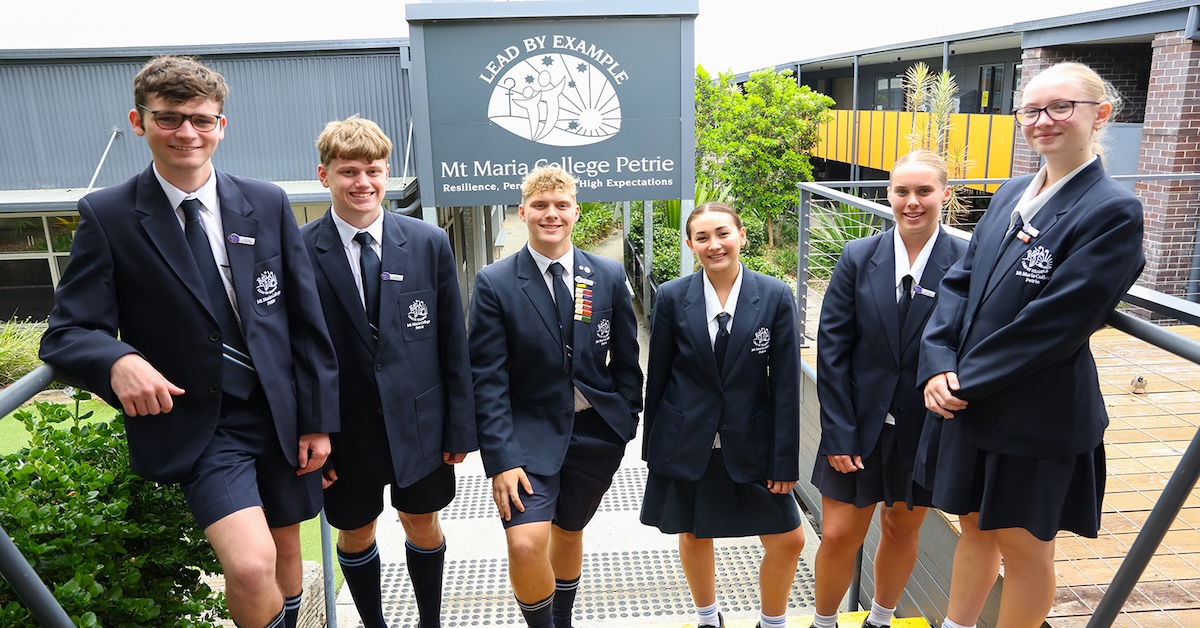
Mt Maria College has revealed the crest that will represent the Petrie school when it becomes St Marcellin Catholic College. The new identity marks the next stage of a transition announced by the college, following two years of consultation with students, parents and staff.


The college announced in April that it will formally adopt the St Marcellin Catholic College name in January 2027. Planning will continue throughout the remainder of 2026. 

New signage, branding and uniforms will form part of the transition. The college previously said uniform changes would be phased in to avoid extra costs for families. It also indicated that the existing college colours would remain largely unchanged.

Principal Kerry Maher said the identity would support the college’s future direction while retaining values already established within the school community.

New name strengthens Marist identity

St Marcellin Catholic College will take its name from St Marcellin Champagnat, founder of the Marist Brothers. His approach to education centred on young people, faith, compassion and personal relationships, and those principles already shape its work with students.

Maher said the new name gives the school a clearer identity and expresses its Marist character more directly. She also linked the change to student growth, wellbeing and strong learning outcomes.

The school’s Marist values include family spirit, simplicity, presence, love of work and care for people who need support. Those values would play a greater role in shaping the school’s future. 

Crest links faith, heritage and place

The new crest places a cross at the centre of the design, representing Jesus Christ and the school’s Catholic identity. A heart represents the Sacred Hearts of Jesus and Mary, while the Auspice Maria symbolises Mary’s protection. The emblem also reflects the college’s Marist identity.
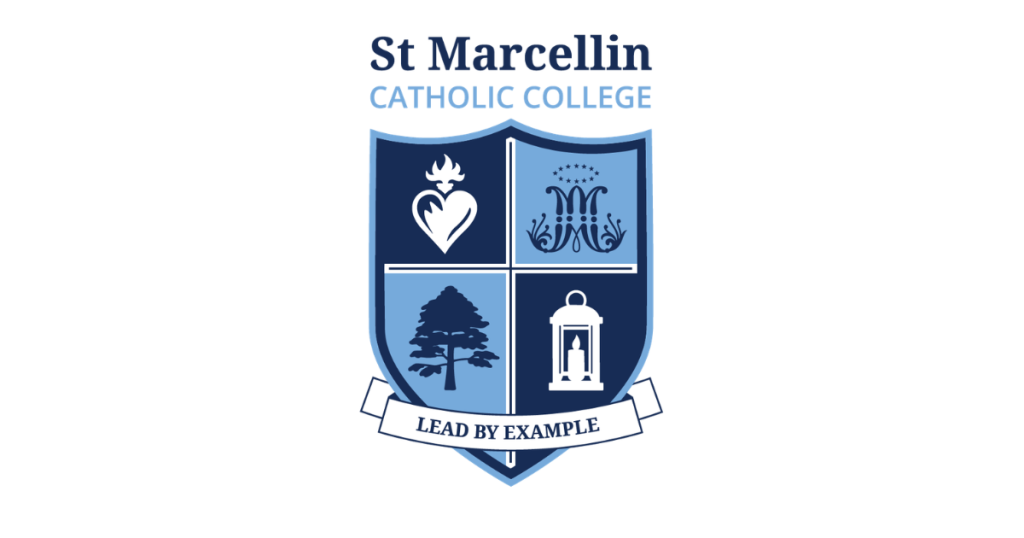
Photo Credit: Supplied

An Indigenous Bunya Pine acknowledges the history and heritage of the local Gubbi Gubbi people. The symbol gives the crest a clear connection to the Petrie area.

A lantern represents the call for members of the school community to bring light to others through their actions.

The motto, “Lead by Example”, appears beneath the crest. It draws on 1 Timothy 4:12 and encourages students to show leadership through the way they speak, live and serve.

Mt Maria and Kolbe histories will remain

The transition will not erase the school’s earlier identities. The school will continue to recognise the history of Mt Maria College and the former Kolbe College. Both names form part of the college community’s history in Petrie.

During Catholic Education Week, the college shared material from Kolbe College’s foundation year with Brisbane Catholic Education. It also shared a 25-year celebration publication featuring the Kolbe College and Mt Maria College logos together.

Student programs set to continue

The college has also emphasised that its central work with students will remain unchanged. It will continue to offer academic and vocational pathways for different interests and post-school goals. These include university preparation, industry experience and mixed learning options.

Programs named by the college include the Scholars Program, Industry Recruits, STEM Innovators, Inquiry Learning and the Integrated Learning and Pathways Program.

Career education will continue across Years 7 to 12. Sport, instrumental music, student leadership and pastoral programs will also remain.

The school also plans to retain camps, retreats, work experience, excursions and industry visits. Arts opportunities include the college band, vocal group, dance troupe and the Luminaire Art Extension Program. Students will also continue to take part in representative sport and community service initiatives.

The school said its staff would keep focusing on knowing students individually and helping them build confidence, skills and purpose.


Consultation shaped the decision

Parents, students and staff took part in consultations during 2024 and 2025. According to the college, participants wanted continued improvement, a strong sense of purpose and an identity that would support students into the future. The feedback also showed support for high expectations in learning and a strong focus on student wellbeing.

Published 30-July-2026

A Cross Built From a Fallen Tree: Mt Maria College Petrie Finds Hope at the Heart of Easter

Students and staff at Mt Maria College in Petrie gathered this Easter to remember the Passion of Good Friday and celebrate the hope of the Resurrection, marking the season with a moment that brought together faith, community and the unexpected beauty of something made from loss.


Petrie parish priest Fr Louie Jimenez blessed and installed a new college cross during the school’s Easter gathering, carved from the timber of a college tree brought down by Cyclone Alfred. For a community that weathered the storm together, the cross carries a meaning that goes well beyond decoration.

Something Beautiful From the Storm

Mt Maria College principal Kerry Maher described the cross as a powerful symbol of resilience and renewal for the whole community. “Easter invites us to pause and reflect on suffering, sacrifice and renewal,” she said. “Even in times of challenge, hope can be restored and new life can emerge.”

The cross was not kept within the school’s walls. It was also used during Petrie Parish’s Good Friday Celebration of the Lord’s Passion, deepening the connection between the college and its parish community and giving the symbol a life that reached beyond the school gates.

That connection between school and parish is central to how Mt Maria approaches formation. Students and staff from a wide range of cultural backgrounds and beliefs gathered in shared prayer for the occasion, finding common ground in the season’s themes of suffering, hope and renewal.

“When we educate the whole person, spiritually, academically, socially and emotionally, we create the conditions for young people to grow as hopeful and confident learners,” Ms Maher said.

Part of Something Bigger Than One School

Mt Maria’s Easter gathering took place against a backdrop of Easter activities across Brisbane Catholic Education’s 146 schools, each finding their own way to live out the season’s meaning in community.

St Eugene College in Burpengary raised more than $8,000 for Caritas Australia’s Project Compassion this Easter, channelling their patron saint’s spirit of charity and generosity into house initiatives and whole-school events. The fundraising reflected a conviction that belonging extends beyond the school community and out towards what students described as a global family.

“Their aim was to show how small, shared actions could bring hope and change for people at the margins,” a spokesperson for the college said.

St Ignatius School in Toowong also raised funds for Project Compassion, combining an Easter Hat Parade with donation drives for Easter eggs, soft toys, activities and stickers. Principal Benedict Campbell described hope as the thread running through the whole effort.

“Hope is not about ignoring the challenges people face,” he said. “Rather, hope invites students to walk alongside others with compassion, trusting that love and faith can bring light even in difficult times. At Easter, we are reminded of Jesus’ example; he did not turn away from the suffering of the world but responded with care, generosity and self-giving love.”

Walking the Road Together

Sophia College in Plainland offered its first-ever cohort of Year 12 students an Easter experience designed to be immersive rather than observational. The students walked the Stations of the Cross with Franciscan Father Bernie Thomas at St Mary’s Church in Ipswich, praying and reflecting together at each station.

Principal Narelle Dobson said the experience reminded students that they were not walking alone. “Hope brings people together, gives meaning to shared moments and helps a community grow not just in size but in spirit,” she said.

Why It Resonates Here in Petrie

For the North Lakes and Petrie community, Mt Maria College’s Easter gathering carries a particular local resonance. Cyclone Alfred was not an abstract weather event for this part of southeast Queensland; it was something residents lived through, cleaned up after and are still processing. A cross made from a tree that the cyclone brought down, blessed and installed at the heart of the school, is the kind of thing that turns a religious observance into something genuinely local and deeply felt.

That is what community schools do at their best. They take the universal themes of a season, hope, renewal, the idea that something good can come from something hard, and make them specific to the place and the people who call it home.


Published 8-April-2026

Women Leading the Way in SEQ Catholic School Communities

Communities across South East Queensland are seeing more women step into the top jobs at their local Catholic schools, with a growing number of female educators appointed as principals and heads of college in recent years. As International Women’s Day approaches on 8 March, Brisbane Catholic Education (BCE) has highlighted the appointment of 29 women to principalship or head of college or campus roles over the past two years, reflecting a shift toward stronger female representation in school leadership.

From Graceville and Bardon to Mango Hill, Birkdale and Scarborough, these appointments are shaping the future of education in neighbourhoods across the region. For families, students and staff, it means welcoming experienced educators who will guide school communities through the next chapter of learning and growth.

BCE’s People and Culture Executive Cathy Heffernan said the appointments reflect a broader effort to support and prepare more women for leadership roles in schools.

“Since the program commenced, 38 per cent of participants have progressed into Head of College, Principal or BCE office leadership roles,” Ms Heffernan said.

“Beyond appointments, the program builds confidence, capability and connection, qualities that are essential for leadership in today’s educational landscape.”

Jessica Lusk, Head of College Unity College (Secondary), Caloundra West
Photo Credit: Supplied

Across BCE schools, female principalship has increased from 33 per cent in 2021 to 50 per cent in 2026. In BCE offices, women now make up 64 per cent of leadership roles, up from 48 per cent in 2021.

Many of the recently appointed leaders have participated in BCE’s Women in Leadership program, which was reimagined in 2024 to strengthen leadership pathways and build a pipeline of future-ready female leaders.

For educators like Notre Dame College, Bells Creek Head of College Jasmine Brown, the program has had a lasting impact.

“For me the program highlighted the importance of women actively supporting and advocating for one another,” she said.

“I also found the course an opportunity to connect with other like-minded women who shared the same aspirations for senior leadership.

“The impact of the program has endured well beyond its conclusion, particularly for me through the lasting professional relationships I have built.”

Jasmine Brown, Head of College Notre Dame College, Bells Creek
Photo Credit: Supplied

Since March 2024, a number of schools across South East Queensland have welcomed new female leaders, including appointments at St Mary’s College in Ipswich, St Patrick’s Primary School in Nanango, Unity College in Caloundra West, and St Francis College in Crestmead.

Other appointments span communities including Graceville, Bardon, Mango Hill, Ferny Grove, Birkdale, Zillmere, New Farm, Scarborough and Enoggera, where local school communities are now led by experienced educators committed to supporting students, families and staff.

For BCE, the growing number of women stepping into leadership roles reflects a commitment to creating inclusive leadership pathways and recognising the vital contribution women make to education and their communities.

As schools across the region celebrate International Women’s Day, these appointments highlight the strong role women continue to play in shaping the future of Catholic education across South East Queensland.

NamePositionSchoolSuburb
Alison GilbertPrincipalSt Mary’s CollegeIpswich
Sarah McCarthyPrincipalSt Patrick’s Primary SchoolNanango
Jessica LuskHead of College (Secondary)Unity CollegeCaloundra West
Nicole de VriesHead of College (Primary)Unity CollegeCaloundra West
Andrea HickeyHead of CampusSt Francis CollegeCrestmead
Bernadette WrightPrincipalChrist the King SchoolGraceville
Carol SeagarPrincipalSt Joseph’s SchoolBardon
Clare HoganPrincipalOur Lady of Good Counsel SchoolGatton
Renay CondonPrincipalSt Benedict’s Primary SchoolMango Hill
Louise ParryPrincipalSt Thomas More Primary SchoolSunshine Beach
Amanda SteerPrincipalSt Andrew’s Catholic Primary SchoolFerny Grove
Nadia GalettoHead of CollegeSt Bonaventure’s CollegeFlagstone
Jo-Anne BoylePrincipalHoly Spirit SchoolBray Park
Gabrielle JansenPrincipalSt Mary MacKillop Primary SchoolBirkdale
Cheryl BellPrincipalSt Flannan’s Primary SchoolZillmere
Bianca MurphyPrincipalHoly Spirit SchoolNew Farm
Liesl ProfkePrincipalSt Clare’s Primary SchoolYarrabilba
Tracey-lee CheesmanPrincipalOur Lady of Fatima Primary SchoolAcacia Ridge
Veronica WasiakPrincipalSt Michael’s CollegeMerrimac
Gemma LovellPrincipalMother Teresa Primary SchoolOrmeau
Velma ErskinePrincipalSt Joseph’s Primary SchoolNorth Ipswich
Megan PidskalnyHead of CampusFisherONE Online Education—
Jasmine BrownHead of CollegeNotre Dame CollegeBells Creek
Melissa FallarinoHead of CampusSouthern Cross Catholic CollegeScarborough
Felicity PryerPrincipalSt Pius X SchoolSalisbury
Lisa AtholwoodHead of CampusEmmaus CollegeJimboomba
Sharon CollinsPrincipalSiena Catholic CollegeSippy Downs
Kate MacArthurPrincipalOur Lady of Assumption SchoolEnoggera
Helen BoyesPrincipalSt Paul’s SchoolWoodridge

Published 6-March-2026

Music Ignites Mango Hill Community Spirit at St Benedict’s College

At St Benedict’s College Mango Hill, music is more than a subject — it has become part of the school’s heartbeat, thanks to the dedication of teacher Michael White. Since joining the college as a founding staff member in 2013, White has helped transform a modest school program into a dynamic music community that continues to grow each year.


Over time, his commitment and innovative approach have made music an essential part of the school’s identity. He has been recognised as a Highly Accomplished Teacher through the Brisbane Catholic Education (BCE) certification framework, which acknowledges educators who shape culture and inspire excellence across schools.

Performance That Builds Confidence

White’s approach centres on giving students opportunities to perform and express themselves. Under his guidance, lunchtime and morning-tea concerts have become regular fixtures on the school calendar, offering students in Years 9 to 12 the chance to perform for their peers. These performances help students set learning goals, build confidence, and experience the energy of live performance.

Since 2023, the program has expanded beyond the classroom. Music students now perform at school carnivals, often playing for up to three hours at a time. These sets feature wind and brass instruments and showcase the creativity and teamwork that define the college’s approach to the arts.

Photo Credit: Supplied

Inspiring the Next Generation

St Benedict’s College Principal Tameika Grist said the success of the music program reflects White’s long-term dedication and the belief that the arts can bring a school community together. She noted that the positive culture created around music has given students confidence and a sense of belonging.

Several graduates have continued their studies at the Griffith Conservatorium of Music and other universities, with some aspiring to become music educators themselves. White’s leadership has encouraged students to pursue their passion beyond the school gates, contributing to a growing network of young musicians connected by their Mango Hill roots.


Commitment to Excellence in Education

The Highly Accomplished and Lead Teachers (HALT) certification recognises educators who demonstrate consistent excellence and influence in their schools. Within BCE, these teachers play a crucial role in driving innovation, mentoring peers, and improving classroom practice. White’s achievements at St Benedict’s College Mango Hill show how passion, persistence, and a commitment to students can spark long-lasting change across a community.

Published 7-Nov-2025

Brisbane Catholic Education to Establish Prep School in Narangba

Brisbane Catholic Education pushes forward with its program to establish new schools and colleges including one Prep school to be situated in Narangba.

Between 2020 and 2025, Brisbane Catholic Education plans to open six new schools in anticipation of demand growth in these areas:

  • Primary school in Redbank Plains , to open with Prep – Year 3 in 2020
  • Three secondary schools to open to Year 7 students in 2021 in Plainland, Yarrabilba, and 2022 in Fitzgibbon
  • Two Prep schools to open in 2024 in Flagstone and 2025 in Narangba

BCE has recently acquired a 18.98ha property on Callaghan and Morgan roads in Narangba, as well as 12ha parcel of land in Flagstone. The Narangba Prep school is slated to start construction in 2022.

Brisbane Catholic Education
Photo Credit: Brisbane Catholic Education / Facebook

BCE is a community of parish and dioscesan Catholic schools operating 141 schools across the Archdiocese. The institution recently opened two Prep schools in Bli Bli and Coomera.

BCE is seeing a surging population growth particularly in school age children in Narangba and its neighbouring suburbs, North Lakes and Burgenpary. The Narangba Prep school along with the five other new schools and the recently opened Bli Bli and Coomera schools, are estimated to accommodate up to 10,000 students.

According to the 2016 Census, children aged 0-14 years made up 26.8 percent of the  Narangba population, as compared to the Qld’s 19.4 percent. 

Of the total 18,573 people, 55.8 percent of Narangba population were couple families with children whilst 14.7 percent were one parent families. Narangba population is projected to grow to 22,198 in 2021 and 26,201 in 2026.

REA Group’s realestate.com.au data shows as steady house price growth in Narangba from $406,250 in 2011 to $493,000 in 2018. The latest median house price, based on 228 sales from 1 July 2018 – 29 July 2019, is $499,400.