




Mango Hill Urban Village Faces Resident Concerns Over Traffic and Infrastructure

Residents are making their voices heard as the Mango Hill Urban Village proposal undergoes public consultation, with several locals raising serious concerns about the scale and impact of the 23-tower development.


Read: Mango Hill Urban Village to Bring 23 Towers and Thousands of Homes to North Lakes


The project, proposed by the Pace family for a 10.4-hectare site on Anzac Avenue, has attracted pushback from community members worried about traffic congestion and infrastructure strain.
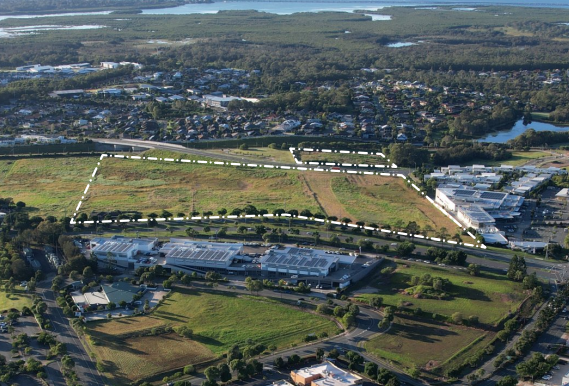
Photo credit: DA/2025/1375

The development application (DA/2025/1375), currently before the City of Moreton Bay, seeks approval for 2,329 apartments across towers ranging from eight to 30 storeys—more than triple the 715 homes approved for the same site in 2018.

Infrastructure Concerns Dominate Feedback

Some residents have formally submitted concerns about increased traffic pressure on local roads, with one resident bluntly stating: “Current infrastructure in the area, roads, parking parklands and schools are not sufficient for the current population as of now. Anzac Ave is choking with current traffic levels and can’t accommodate more (Bruce Hwy is worse).”

The sentiment reflects broader anxiety about whether existing infrastructure can handle the influx of thousands of new residents to the area.

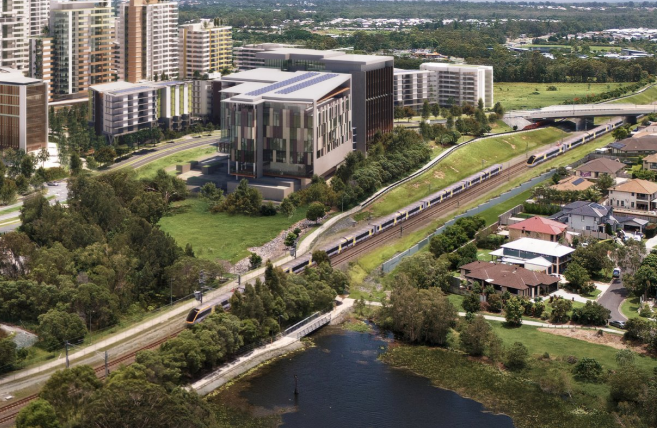
The developers propose a new intersection and public road network connecting to Anzac Avenue and Bowen Street as part of the project. They point to the site’s location just 400 metres from Mango Hill train station as a key feature of their transit-oriented development approach.

Vision for Growth
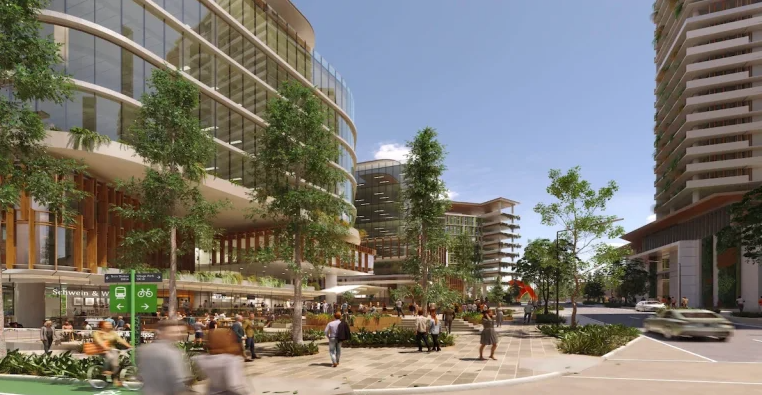
Photo credit: DA/2025/1375

The Pace family, who transitioned to property development after selling their egg business in 2023 for a reported $350 million, argue the region needs this kind of transformation.

In their submission to council, the developers stated the original 2018 plans, still unbuilt, failed to capitalise on the site’s unique opportunities near major transport infrastructure. They maintain the current proposal would deliver significant economic and lifestyle benefits that the lower-density version could not achieve.

Beyond residential towers, the proposal includes 118,000 square metres of commercial floorspace and 6,600 square metres dedicated to food, beverage and small retail operations at ground level. The developers estimate the project could create approximately 12,000 jobs—a substantial boost to the local economy.

A “green spine” pedestrian and cycling network would connect various zones within the precinct, along with 1.23 hectares of green space and pedestrian corridors designed to create a walkable urban environment.

Addressing the Housing Shortage
Mango Hill Urban Village
Photo credit: DA/2025/1375

The developers have pointed to Moreton Bay’s housing composition as justification for high-density development. With 81 per cent of the region’s housing stock consisting of more expensive detached homes, they argue the towers would provide much-needed options for young professionals and couples priced out of the traditional housing market.

Moreton Bay’s population of 500,000 is projected to grow by 200,000 residents over the next 20 years, making it one of Australia’s fastest-growing regions. The developers contend that high-density developments near transport hubs are essential to accommodate this growth sustainably.

However, when questioned by council, the developers made no commitments to affordable housing minimums, raising questions about whether the units will genuinely serve those struggling with housing costs.

Heritage Trade-offs
Mango Hill Urban Village
Photo credit: DA/2025/1375

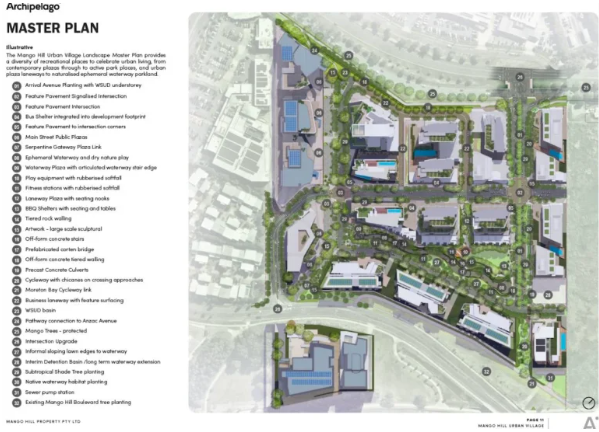
The proposal would require removing three mango trees from the central island of Anzac Avenue to accommodate new road infrastructure. These trees hold historical significance, having been planted as part of a World War I memorial project that employed returned servicemen and honoured fallen comrades.

The developers have proposed planting 82 new mango trees across the site to offset the loss of 12 trees in total, though the heritage connection may prove difficult to replicate.

What Happens Next

Three additional submissions were rejected by council for not being properly lodged, suggesting there may be broader community interest in the proposal that hasn’t been formally captured.

The developers initially requested a 20-year approval period but scaled this back to 10 years after council queries—a move that may reflect recognition of community concerns about locking in such a long development timeline.

As the public submission period continues, the City of Moreton Bay faces the challenge of balancing resident concerns about infrastructure with the need for housing diversity and economic development in one of Queensland’s fastest-growing regions.


Read: Debate Grows Over Proposed School on Former North Lakes Golf Course


The City of Moreton Bay will make a decision on the application following the conclusion of the public submission period.

Published 31-December-2025

Mango Hill Urban Village to Bring 23 Towers and Thousands of Homes to North Lakes

A major transformation is on the horizon for Mango Hill as the Pace family, who have transitioned to property development, lodges plans for a 10.4-hectare urban precinct featuring 23 towers and over 2,300 apartments.


The proposal (DA/2025/1375) envisions a dense, transit-oriented urban village at 1785–1813 Anzac Avenue, directly linked to Mango Hill train station and Westfield North Lakes.

From Egg Producers to City Builders

Pace Farm, formerly Australia’s second-largest egg producer based in Sydney, was sold to investment firm Roc Partners in 2023 for approximately $350 million. The Mango Hill site, once a pine plantation cleared in the 1990s, forms part of the Mango Hill Infrastructure Development Control Plan (DCP), adopted in 2011, which earmarked the area for intensive urbanisation with up to 25,000 new homes.

The family’s latest move reflects a broader national trend—repurposing strategic inner-suburban sites into high-density, mixed-use communities.

Photo Credit: DA/2025/1375

The project is set to function as a major employment hub and catalyst for regional economic growth by combining residential and commercial components within the towers.

Project Snapshot

  • Developer: The Pace family (former owners of Pace Farm)/Mango Hill Property Pty Ltd
  • Architect: Archipelago
  • Towers: 23 (ranging from 8 to 30 storeys)
  • Residential Units: 2,329 apartments
  • Commercial Space: 118,023 sqm
  • Retail & Dining: 6,600 sqm
  • Green Space: 1.23 hectares including pedestrian corridors
  • Job Creation: Estimated 12,000

Planning History and Evolution

An earlier version of the plan, approved in 2018, included 13 towers and 715 dwellings. The current proposal more than triples residential capacity, in line with upgraded transport connectivity and regional growth targets.

Located just 400 metres from the Mango Hill train station, the proposal integrates a “green spine” pedestrian and cycling network that will link key commercial, retail and residential zones. The project also includes intersection upgrades and improved public access to Anzac Avenue.

Mango Hill
Photo Credit: DA/2025/1375

Environment and Community

While 14 trees—including 11 mango trees—are slated for removal to facilitate road upgrades, the developer has pledged comprehensive landscaping and replanting efforts across more than 12,000 square metres of open space.

Community consultation is expected to begin mid-year, with stakeholders calling for a balance between growth and livability.

Urban planning experts say the Mango Hill proposal mirrors other successful mixed-use hubs across southeast Queensland, such as Springfield and Coomera.

Photo Credit: DA/2025/1375

What Happens Next

Moreton Bay’s population has surged in recent years, and Council predicts the area will need thousands of new homes. The urban village aims to ease pressure by placing high-density housing close to trains, shops and jobs, aligning with a long-term plan set in 2011.

The application is under review by Moreton Bay Regional Council. If approved, the village could house 5,000 people and help locals stay closer to home for work and services.


Published 11-May-2025

Urban Village Proposal Unveiled for Mango Hill

Plans have been lodged for a large-scale urban village in Mango Hill, featuring 23 new towers and housing for approximately 5000 residents.


Large-Scale Urban Village Proposed for Mango Hill

A development application (DA/2025/1375) has been submitted for a mixed-use precinct in Mango Hill, set to transform more than 10 hectares of land into a dense residential and commercial hub. Known as the Mango Hill Urban Village (MHUV), the proposal includes 23 urban towers, retail tenancies, commercial workspaces, and public open space.

Mango Hill development
Photo Credit: DA/2025/1375

Project Scope and Design

The proposed site spans 10.36 hectares between Anzac Avenue and both sides of Mango Hill Boulevard. If approved, the village would deliver around 2329 high-density dwellings across residential towers ranging from eight to 30 storeys.

Commercial components would include multiple towers of eight to 10 storeys, offering a total of 118,000 square metres of floor space. The precinct is expected to support about 12,000 jobs through workplace campuses, retail, and food outlets. A “green spine” linking the site to Mango Hill Station, located 400 metres away, is also part of the design.

Ground-floor uses across the development will be allocated to food and beverage venues and small-format retail spaces. Approximately 1.23 hectares of the area is designated as open space for public use.

Mango Hill Urban Village
Photo Credit: DA/2025/1375

Site Background and Previous Approvals

The site was previously occupied by Pace Farm, formerly one of Australia’s largest egg producers, which was sold in 2023. In 2018, Moreton Bay Regional Council had approved a separate plan for 13 towers up to six storeys, comprising 715 dwellings and commercial facilities. Those plans remain current but have since been re-evaluated.

The new application reflects a shift towards higher density living, with the developer’s revised vision aiming to better leverage existing transport and infrastructure.

Mango Hill
Photo Credit: DA/2025/1375

Environmental and Transport Considerations

To enable site access via a new intersection on Anzac Avenue, 14 trees—11 of which are mango trees—would be removed. The development application notes a commitment to replacing these with younger mango trees, aimed at enhancing the streetscape with longer-lasting vegetation.

The proximity of Mango Hill Station is central to the project’s transit-oriented design, with a dedicated pedestrian corridor intended to connect key areas within the site to public transport.

Mango Hill Urban Village plans
Photo Credit: DA/2025/1375

Planning Process and Intent

The development application seeks a preliminary approval for a material change of use, which would modify the Moreton Bay Regional Council Planning Scheme 2016. This change is aimed at facilitating the delivery of the mixed-use precinct as envisioned.


According to the application, the existing 2018 approval would not provide the same level of economic or lifestyle benefits, with the updated plan considered more suited to the area’s evolving urban landscape.

Published 6-May-2025