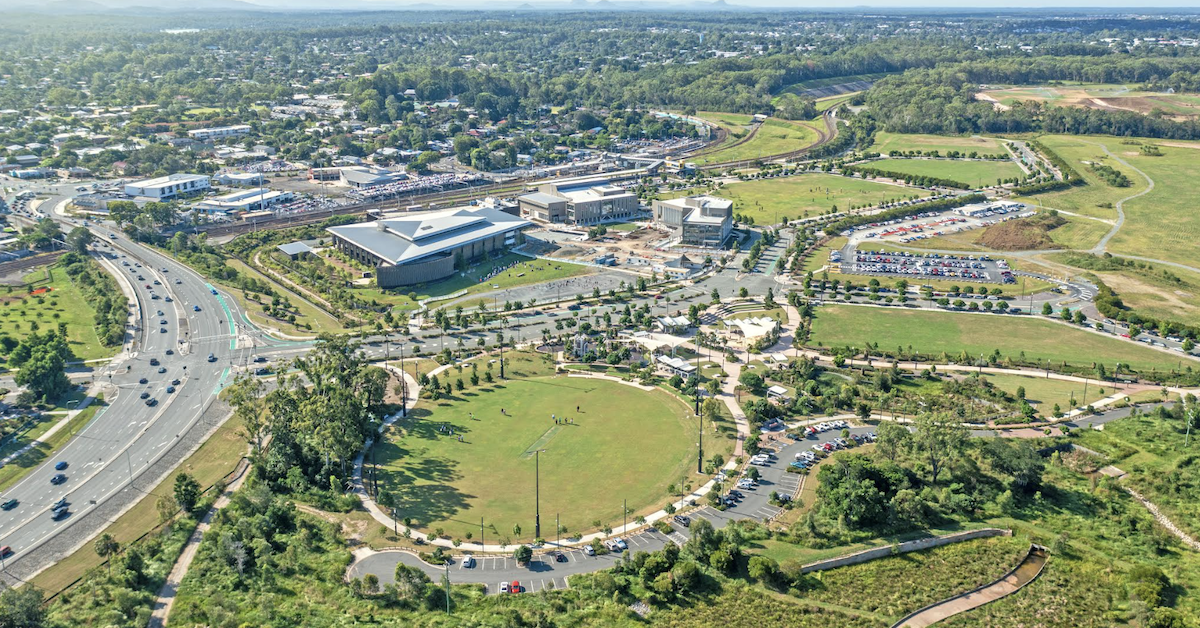




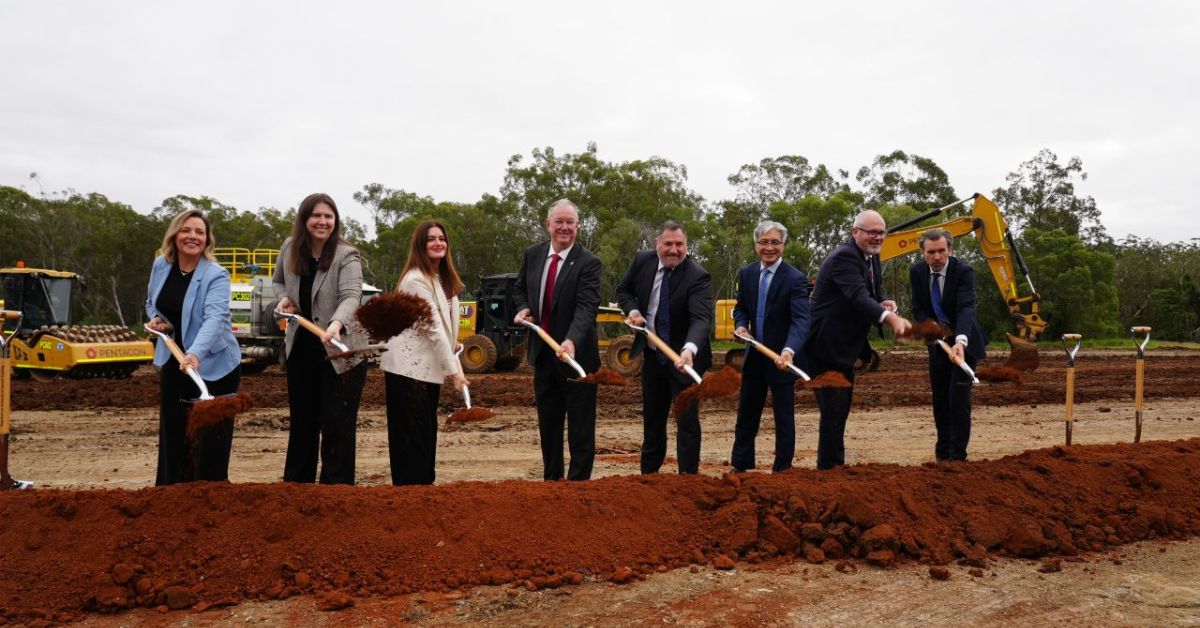
PsiQuantum has broken ground at Moreton Bay Central in Petrie, officially beginning construction of what the company describes as the world’s first utility-scale, fault-tolerant quantum computer on a site that once housed one of Queensland’s largest paper mills.
Construction began on 17 June, with the project backed by approximately $940 million in combined investment. It positions Moreton Bay Central as PsiQuantum’s Asia-Pacific headquarters and places the region at the centre of one of the most ambitious technology construction projects in the country’s history.
The potential impact of quantum computing
Fault-tolerant quantum computers operate on fundamentally different principles from conventional computers. Where today’s machines process information as binary bits, quantum systems use quantum bits, or qubits, that can exist in multiple states simultaneously, enabling certain classes of problems to be solved at a scale and speed no classical computer could approach.
The applications researchers expect to unlock include breakthroughs in drug discovery, materials science, energy systems, logistics optimisation, financial modelling and agricultural science. The qualifier “utility-scale” matters: it describes a machine powerful and reliable enough to tackle real-world commercial and scientific problems rather than laboratory demonstrations. No such machine exists yet anywhere in the world.
“For decades, quantum computing has held the promise of transforming what humanity can achieve through computation,” said PsiQuantum Interim CEO Victor Peng at the groundbreaking. “Today in Australia we are beginning to turn that promise into reality.”
How PsiQuantum is building it
PsiQuantum’s approach is photonic, using particles of light rather than superconducting circuits or trapped ions to carry quantum information. The practical advantage of photonics is that it operates closer to room temperature in some components and can leverage existing semiconductor manufacturing techniques used to produce optical chips.
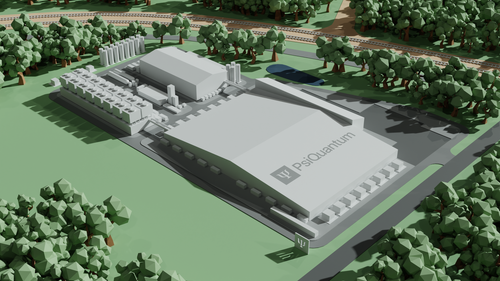
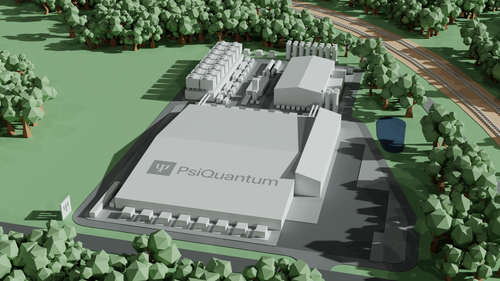
The facility’s central piece of infrastructure is a cryoplant ordered from Linde Engineering in late 2024, which will cool critical quantum components to near absolute zero. It will be one of the largest cryoplants ever constructed for quantum computing. Delivery is scheduled for the second half of 2027, after which PsiQuantum will commission the system before accepting cryogenic cabinets filled with photonic quantum chips networked via standard optical fibre.
The system at Moreton Bay is expected to be operational in 2029, pushed back from the original 2027 target that was announced when the project was first revealed in April 2024.
The site that made this possible
PsiQuantum originally planned to build the facility at Brisbane Airport, but relocated to Moreton Bay Central after identifying the Petrie site as better suited to the project’s power, utility and infrastructure requirements.
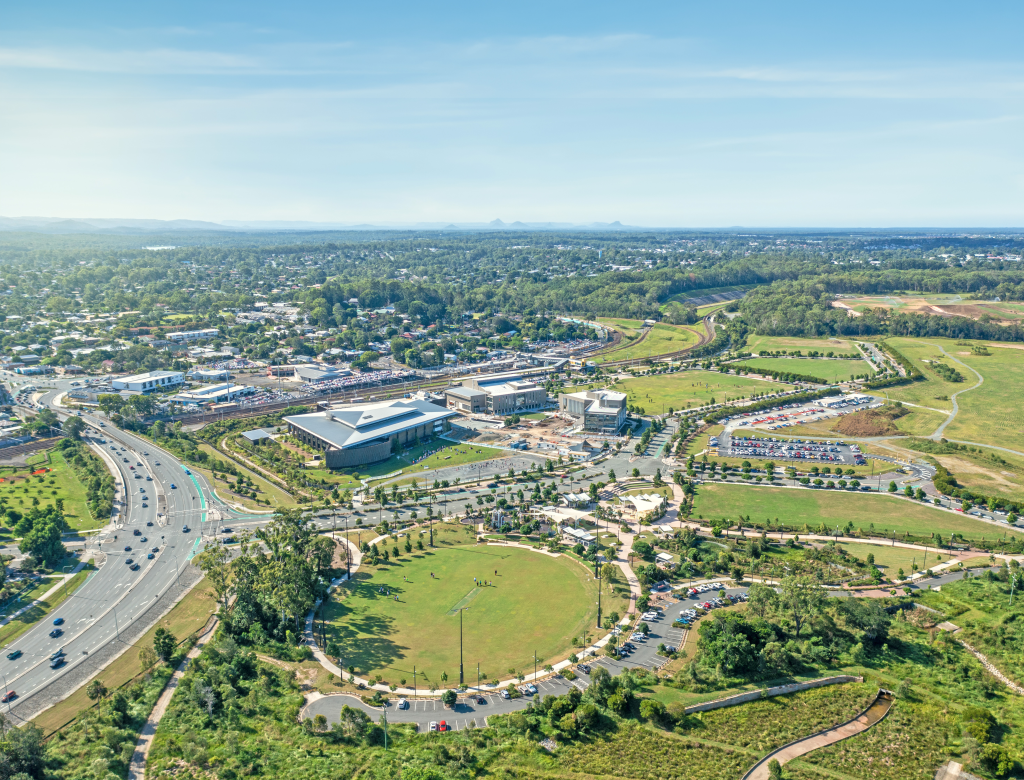
The former Petrie Paper Mill had operated at industrial scale for decades, giving the site the heavy-duty services infrastructure that quantum computing at this level demands. New energy infrastructure commissioned ahead of the 2032 Olympic precinct development at the site has added further capacity.
Robert Lindwall, PsiQuantum’s head of Australian operations, described Brisbane Airport Corporation as a constructive early partner and thanked the airport precinct for its support before the project found its permanent home.
Building the ecosystem around it
A month before the Petrie groundbreaking, PsiQuantum opened its Test and Validation Lab at Griffith University‘s Nathan campus, including a high-powered cryogenic system to test photonic quantum chips and sub-systems. That facility is where the components for the Moreton Bay machine are being developed and refined before going into the main system.
The co-location of the Test and Validation Lab at Griffith, the TAFE Centre of Excellence at Moreton Bay Central and the USC Moreton Bay campus reflects a deliberate plan to build not just a machine but a regional quantum ecosystem, with research, training and manufacturing capacity growing alongside the hardware itself.
Jobs across engineering, technical operations, advanced manufacturing, research and professional services are expected to be created at the Petrie site as construction progresses.
For more information on PsiQuantum and the Moreton Bay Central project, click here.
Published 22-June-2026