




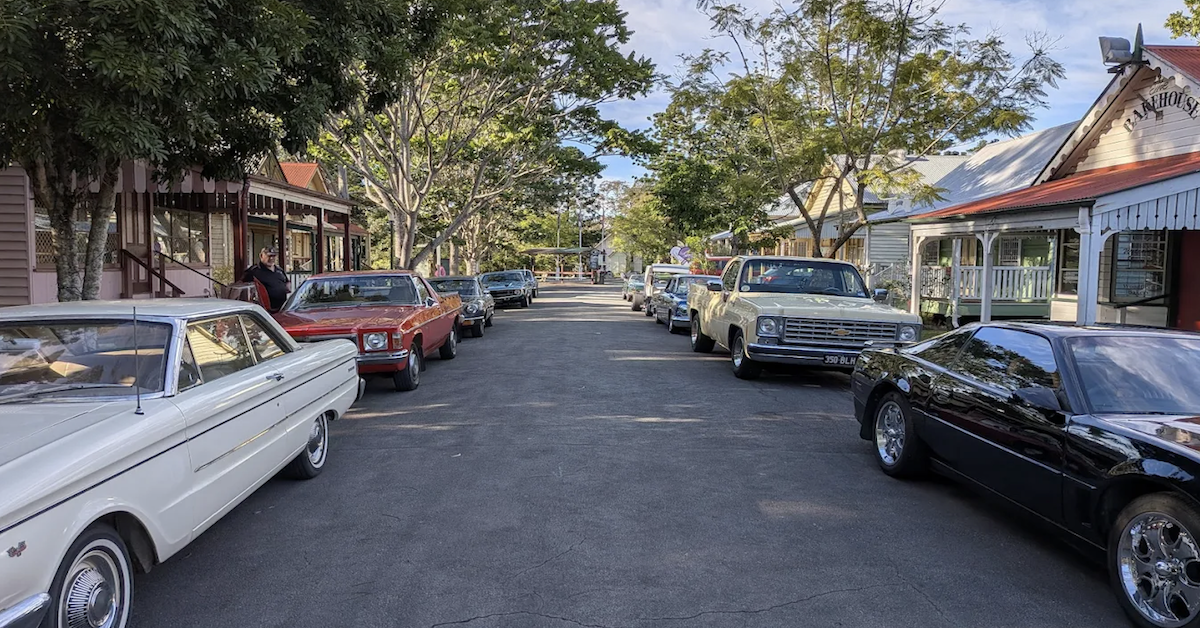
Old Petrie Town Revival Mirrors Petrie’s Changing Identity

For years, Old Petrie Town stood as a reminder of the suburb Petrie used to be — practical, familiar and shaped by its industrial past. Now, as restoration works move ahead across the historic village, the site is becoming part of a much bigger story unfolding north of Brisbane, where Petrie has steadily shifted from a commuter suburb into one of Moreton Bay’s fastest-changing education and lifestyle precincts.


A Suburb Once Defined by the Paper Mill

Long before the arrival of university students and new commercial developments, Petrie was closely tied to the Australian Paper Mill, which operated beside the North Pine River for decades. The mill shaped the local economy and identity until its closure in 2011 left behind a massive industrial site near Petrie railway station.

What followed was one of the largest redevelopment projects in the region.

The Queensland Government later declared the area a Priority Development Area, paving the way for what is now known as Moreton Bay Central. The project spans hundreds of hectares and includes public spaces, commercial land, future housing and the growing UniSC Moreton Bay campus.

This period marked the first major shift in how Petrie was being viewed.
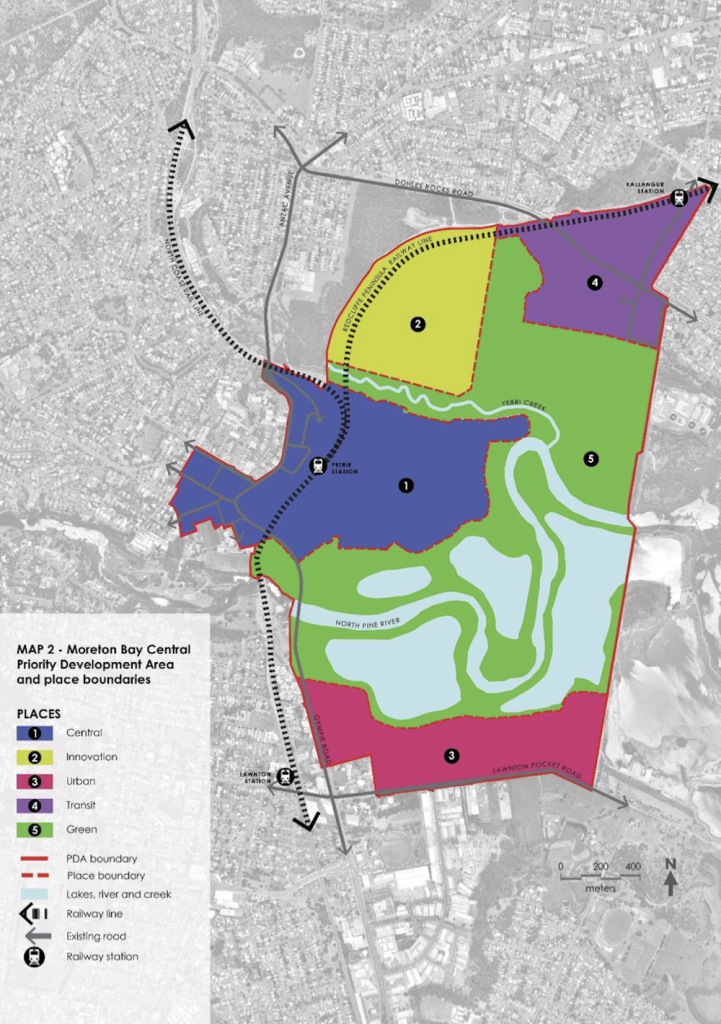
Moreton Bay Central
Photo Credit: EDQ QLD

UniSC Changed More Than the Skyline

When the University of the Sunshine Coast opened its Moreton Bay campus in 2020, the suburb began attracting a different mix of people. Students, researchers, hospitality businesses and new residents started moving through an area once known mainly for train commuters and passing traffic.

The campus has continued expanding, with three major buildings added in 2024, including health, engineering and research facilities.

That growth has flowed into surrounding suburbs including Kallangur, Lawnton and North Lakes, where increased demand for housing and local businesses has followed the area’s population growth.

New student accommodation proposals and upgrades around the lake precinct have added to the sense that Petrie is no longer developing around a single project, but through several layers of change happening at once.

Old Petrie Town Finds a New Place in the Story

Against that backdrop, Old Petrie Town has taken on fresh importance.

City of Moreton Bay has committed millions of dollars towards restoration and maintenance works across the heritage village, including upgrades to ageing buildings, infrastructure repairs and improvements to public areas. The council has also flagged plans to refurbish the Heritage Hotel and Function Centre following the retirement of its long-term leaseholder.

The village has remained a regular stop for markets, weddings, school excursions and community events over the years, even as the surrounding suburb changed around it.

Rather than removing the area’s older identity, the current works aim to keep one of Petrie’s best-known landmarks active while newer developments continue reshaping the district.

Council statements linked the project to preserving the site’s historical value while improving the visitor experience and supporting future tourism activity.
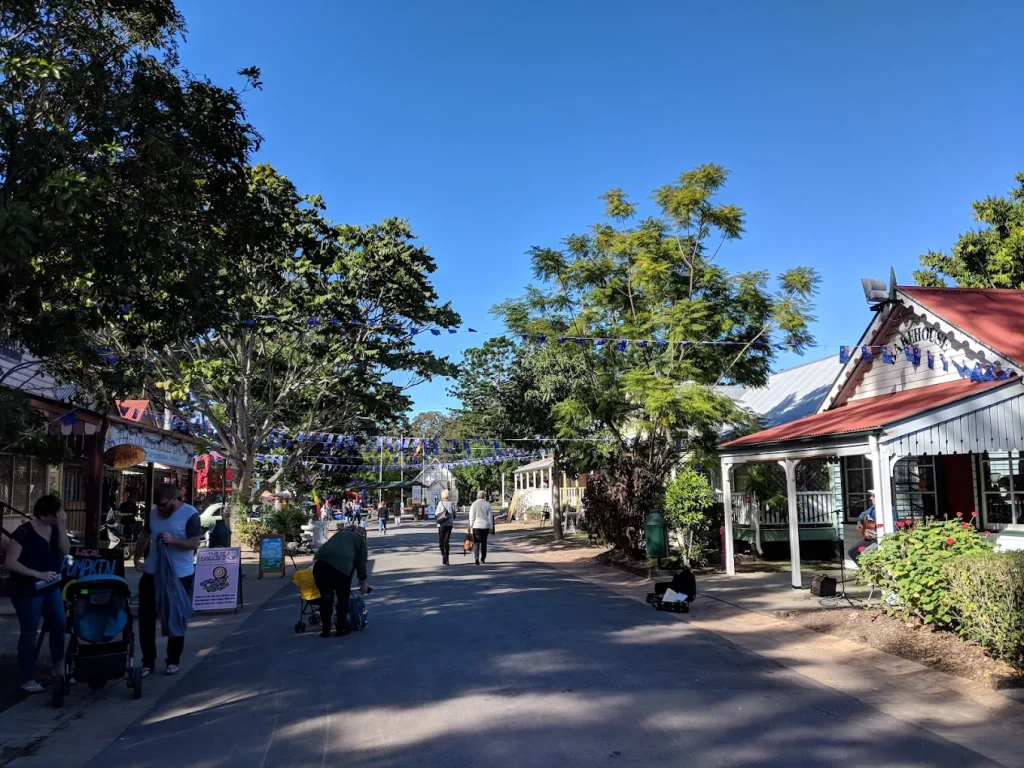
Photo Credit: Lauren Cox/Google Maps

Growth Around Petrie Starts Reaching Further North

The changes taking place in Petrie are also being felt across the northern corridor, particularly in North Lakes, where population growth and transport links have increasingly tied the suburbs together.

Petrie railway station remains a key connection point for workers and students travelling between Brisbane and Moreton Bay, while nearby road upgrades and commercial investment have continued drawing attention to the area.

The transformation has not arrived in the same way as masterplanned suburbs like North Lakes, which expanded rapidly over a shorter period. Petrie’s shift has happened gradually through redevelopment, education investment, public infrastructure and community projects spread over several years.

That slower pace has made the changes less dramatic day-to-day, but more noticeable over time.

A Different Future Taking Shape

Old Petrie Town still looks much the same in many places, with heritage buildings, market stalls and timber shopfronts remaining central to the site’s character. But around it, the suburb has entered a very different chapter from the one many long-term residents remember.

Between the university expansion, redevelopment of the former mill land and continued investment in community spaces, Petrie has become one of the region’s most closely watched growth areas.


The work now happening at Old Petrie Town reflects that broader shift — not replacing the suburb’s past, but finding a place for it inside a rapidly changing part of Moreton Bay.

Published 20-May-2026

12-Month Development Pause Proposed in Narangba East

A large area of Narangba East is under interim planning controls, with local officials proposing a 12-month pause on urban development to support the creation of a future employment precinct.


Background to the Planning Proposal

City officials have advanced its long-term investigation into future land uses across Narangba East, an area currently zoned rural residential. The Narangba East Planning Investigation began formally in 2023 following years of earlier planning studies that commenced in 2010.

In December 2024, Phase 1 of the investigation was completed, which outlined a preliminary planning direction. It identified the potential for sections of the 447-hectare Rural Residential Investigation Area to be repurposed for future employment-generating activities, alongside housing and open space.

Narangba East rezoning
Photo Credit: City of Moreton Bay

Proposed TLPI to Delay New Urban Subdivisions

Officials have resolved to request approval from the Queensland State Planning Minister to introduce a Temporary Local Planning Instrument (TLPI) over approximately 365 properties. The TLPI would temporarily suspend new residential subdivisions or other urban development for up to 12 months, without changing current zoning or existing land use rights.

Under this interim measure, property owners can still undertake works consistent with rural residential zoning such as constructing extensions or sheds. However, the owners cannot pursue new subdivision approvals during the TLPI’s term if adopted.

The TLPI is intended to prevent fragmented development that could compromise the ability to implement coordinated planning outcomes in the area. It also gives city officials time to complete Phase 2, which involves more detailed land use and infrastructure planning.

Economic and Planning Rationale

Council cited recent land supply studies that identified a significant shortfall in industrial-zoned land in southern Moreton Bay, with current availability projected to run out by 2031. Narangba East’s proximity to the Bruce Highway, Brisbane Airport, and Port of Brisbane makes it a strategic candidate for future enterprise and employment use.

Economic analysis estimates the proposed precinct could support approximately 10,527 direct and indirect full-time equivalent jobs and contribute over $1.257 billion in added economic value to the region.

According to the Council, development pressure from urban subdivision applications lodged since 2023 posed a risk to the area’s future planning, prompting the need for an urgent TLPI intervention.

Community Concerns Over Lifestyle and Property Impacts

Residents have expressed concern over the proposal’s impact on the rural lifestyle, local amenity, and long-term property values. Around 3,740 homes were notified of the planning investigation via letterbox drops, leading some locals to believe they may eventually be pressured into selling to private developers.

Council has stated that it has no current plans to acquire or resume land for industrial use as part of the proposed TLPI. The TLPI is not expected to significantly affect property values, as it retains the existing rural residential zoning for the duration of its term.

Narangba East planning investigations
Photo Credit: City of Moreton Bay

Council and State Government Planning Framework

Local official Peter Flannery said the proposed 12-month timeframe was chosen to give certainty to landowners, developers, and the broader community, while enabling expedited planning.

Another local official, Jodie Shipway, noted that Narangba East is one of the few areas within the city that can help meet the State-mandated target of creating 85,400 new jobs and accommodating 125,800 additional homes by 2046.

Previous assessments, such as the 2024 Urban Areas Employment Lands Investigation, identified Narangba East as capable of delivering a substantial share of new employment land and supporting broader economic outcomes.

Next Steps and Consultation Timeline

If approved by the State Planning Minister, the TLPI will remain in effect for 12 months. During this time, Council will advance Phase 2 of the Narangba East Planning Investigation, including further infrastructure studies and a formal Integrated Structure Plan. Public consultation will occur as part of the planning scheme amendment process in Phase 3.

The proposed TLPI cannot be viewed publicly until approved by the Minister. If endorsed, Council will publish details and provide guidance for affected property owners.


For updates, residents can access the “Your Say Moreton Bay” project page.

Published 19-May-2025