





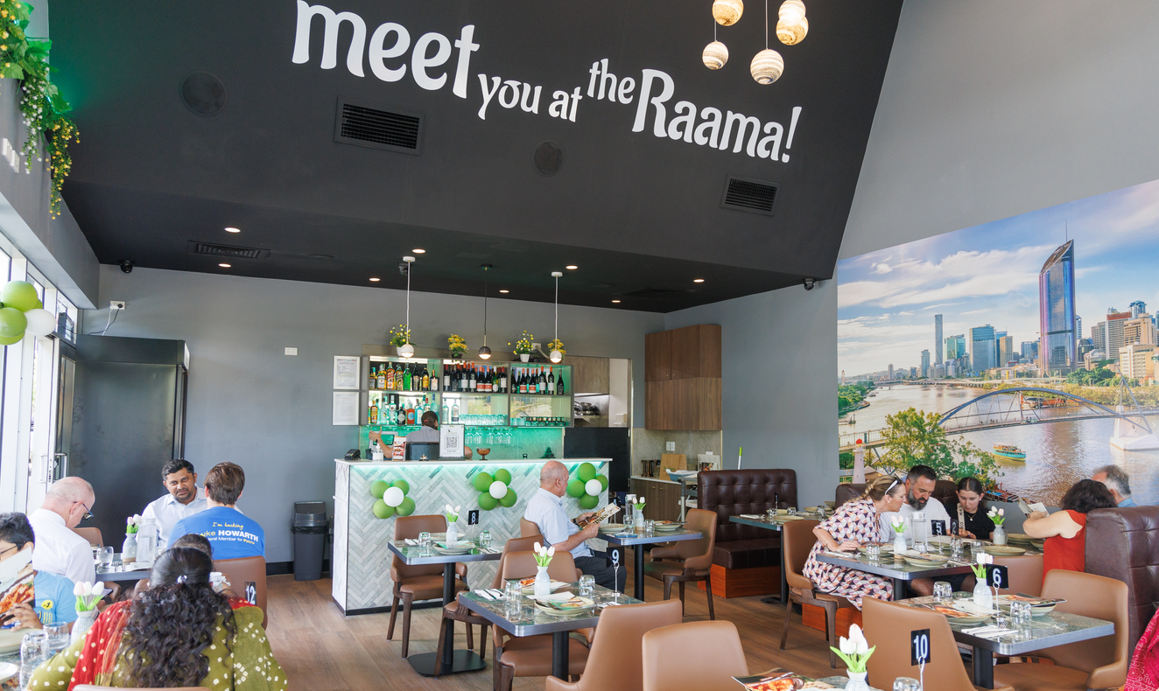
For North Lakes restaurateur Maulik Chaudhari, a half-finished curry can be just as revealing as an empty plate. It’s an unusual philosophy that offers an insight into the man behind The Raama Indian Restaurant, his Gujarati heritage and nearly two decades in Australian hospitality.
An elderly couple visiting The Raama for the first time enjoyed their meal so much that they felt compelled to give Maulik Chaudhari a rather unusual warning.
They loved the food. They loved the restaurant. But there was something they felt he ought to know.
Every restaurant they had grown particularly fond of, they explained, eventually seemed to close down. Having seen it happen several times, they were genuinely concerned that their newfound favourite might suffer the same fate.
Maulik remembers the conversation with considerable amusement. He assured them that they could forget about their supposed bad luck. The Raama, he told them, was going to be around for a very long time.
The couple, now in their seventies, have been returning ever since, usually every three or four weeks.
While Maulik takes considerable pleasure in seeing familiar faces walk through his doors, he is equally interested in the experiences of customers who might leave less than entirely satisfied. So much so that even the staff washing dishes in his kitchen have been given a rather unusual instruction.
Read: North Lakes Golfers Back Starlight Children’s Foundation Again
Why Even the Dishwasher Has Special Instructions
If a plate returns to the kitchen with a substantial amount of food remaining, Maulik wants to know about it.
There could be any number of explanations. A customer might simply be full, or the dish they ordered might be quite different from what they were expecting. Either way, he would rather find out than have the plate cleared away without anyone asking.
Staff are encouraged to check whether customers enjoyed their meals, offer to pack up the leftovers and find out if there was anything they didn’t particularly like. Where appropriate, Maulik says, the restaurant is prepared to offer a replacement dish at no additional charge.
Someone accustomed to a particular version of chicken tikka masala, for instance, might find The Raama’s interpretation quite different. With the variations in recipes and cooking styles across India, Maulik appreciates that even familiar dishes can take diners by surprise.
He also enjoys watching customers photograph their food when it arrives, although their reactions to the first few mouthfuls are of particular interest to him. After nearly 20 years in hospitality, he is still curious about what happens on the other side of the kitchen door.
The Gujarat Childhood Behind a North Lakes Kitchen
Growing up in Gujarat, in western India, Maulik experienced food as an integral part of family life. Among his memories are those of his mother’s cooking, the preparations for Diwali and the excitement of large gatherings where relatives and friends came together to celebrate.
Watching caterers work, observing how meals were prepared for large numbers of people and helping with the traditions of serving guests gave him an appreciation of hospitality long before he considered making a living from it.
Maulik arrived in Australia in 2007 on a student visa, taking a job in an Indian restaurant that would mark the beginning of his career in hospitality. Around 2012–13, he acquired his first restaurant business in Beerwah on the Sunshine Coast, which he says continues to operate.
When the opportunity came to establish a restaurant with a distinctive identity, he and his wife considered more than 200 potential names. They wanted something that reflected their Indian heritage without relying on the familiar references to spices, chillies and other ingredients.
They eventually settled on The Raama, drawing inspiration from Rama, a revered figure in Hindu tradition.
Since opening the North Lakes restaurant in February 2025, according to Maulik, he and his wife have remained closely involved in the kitchen, working with their chefs on recipes, preparation and portion sizes.
He is particularly attentive to the consistency of ingredients, going so far as to purchase certain supplies in bulk rather than risk having to make substitutions that could alter the flavour of a familiar dish.
When the Kitchen Has 250 Guests to Feed
While North Indian curries and other familiar favourites feature prominently on The Raama’s restaurant menu, its catering business gives Maulik an opportunity to revisit some of the food traditions of his childhood.
For families of Indian heritage celebrating a wedding or milestone birthday in Australia, the menu can carry considerable personal significance. A Gujarati family may have quite different culinary traditions from a Punjabi family, particularly when several generations are gathering around the same table.
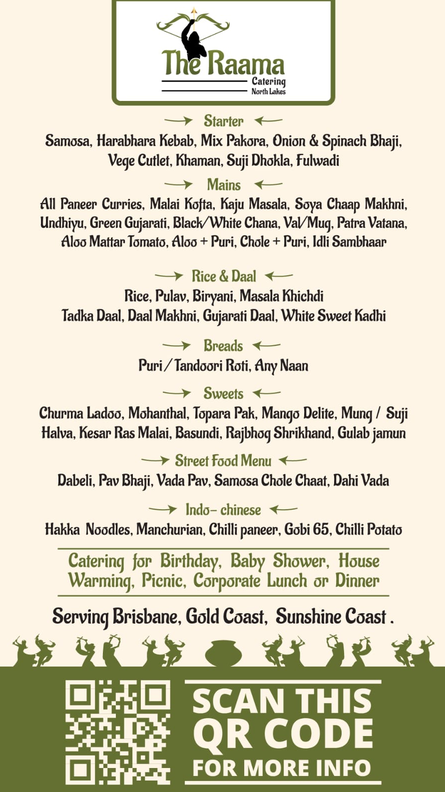
The Raama develops catering menus around those preferences, with offerings extending to Gujarati and Punjabi specialities, Indian street food, Indo-Chinese dishes, biryani and dal baati, a traditional combination of lentils and baked wheat dough balls.
Maulik recalls catering for approximately 250 people at a Diwali celebration in 2025, as well as more recent gatherings of around 108 people at Mount Gravatt and 150 in Brisbane’s southwest.
When interviewed, he was preparing for three separate catering orders for a single Saturday, including a three-year-old’s birthday party. Between them, the orders would provide food for roughly 80 guests alongside the restaurant’s regular trade.
The business has catered for occasions across Brisbane and the Sunshine Coast, where Maulik also enjoys contributing food to community and religious celebrations. At a recent Diwali gathering on the Sunshine Coast, The Raama provided attendees with sweets and savoury snacks.
Some of those who sampled the food subsequently enquired about catering, although for Maulik, part of the pleasure of these gatherings comes simply from sharing the food he grew up with.
The Bigger Thinking Behind a $15 Curry
One of Maulik’s more deliberate business decisions concerns the customer who walks into an Indian restaurant alone.
Ordering a full-sized curry, rice and naan can push the cost of an individual meal beyond $30, potentially leaving a single diner with more food than they can comfortably finish.
The Raama’s alternative is a half-curry, half-rice meal starting at around $15, which Maulik says is available at dinner as well as earlier in the day.
With household budgets under pressure, he believes the smaller portion gives people an opportunity to enjoy Indian food more affordably while trying different curries over successive visits.
There is also a longer-term business consideration. Someone who enjoys an inexpensive curry and rice might return with their family, introduce friends to the restaurant or, months later, approach The Raama about catering for a special occasion.
For Maulik, earning that customer’s confidence is worth more than persuading them to spend more on their first visit.

The Regulars Who Travel for Their Curry
Among The Raama’s customers are people Maulik says travel from Scarborough, Kippa-Ring, Petrie, Warner and Zillmere, well beyond the restaurant’s immediate North Lakes and Mango Hill neighbourhood.
There is also Steve from Griffin, a regular who knows members of staff by name. Over time, conversations have moved beyond what’s on the menu to holidays, family news and the everyday developments in each other’s lives.
In an occupation where so much of the working day is spent attending to ingredients, staffing and the demands of a busy kitchen, Maulik particularly values these moments with customers.
That personal side of the dining experience is also reflected in some of the reviews The Raama has received online.
Better Than Yesterday
Nearly two decades in hospitality have brought their share of challenges for Maulik, who speaks openly about the sacrifices his family has made and the difficulties of maintaining standards in an industry where ingredients, staffing and customer expectations can change.
Rather than measuring his success against that of other restaurateurs, he prefers to consider how far he has progressed himself.
“What I focus on is how much better I am than yesterday,” he says. “If I am better today than yesterday, or a month before, that’s what I want.”
It is a principle he also tries to instil in his children, encouraging them to keep learning, overcome setbacks and persevere when things become difficult.
Read: North Lakes Giving Machine to Turn Christmas Shopping Into Help for Families in Need
At The Raama, that might mean revisiting a recipe, adjusting a portion size or spending a few extra minutes talking to a customer who hasn’t finished their curry. Even after all these years in hospitality, Maulik believes there is something to be learnt from the people who eat at his restaurant.
As for the elderly couple with a history of ill-fated favourite restaurants, Maulik has every intention of proving their superstition wrong.
Published 17-November-2026