



Out Past the Last Streetlight: A Svalbard Wilderness Camp

By Jack Mercer – Rabbit Hole Fisherman

Across the fjord from Longyearbyen, a summer camp offers kayaking, glacier walking and a turn on polar-bear watch. Getting into the Arctic means learning how to live there for a few days, including when to change your plans.

In This Story

There is a small catch in the promise of sleeping under Svalbard’s midnight sun. Someone has to stay awake.

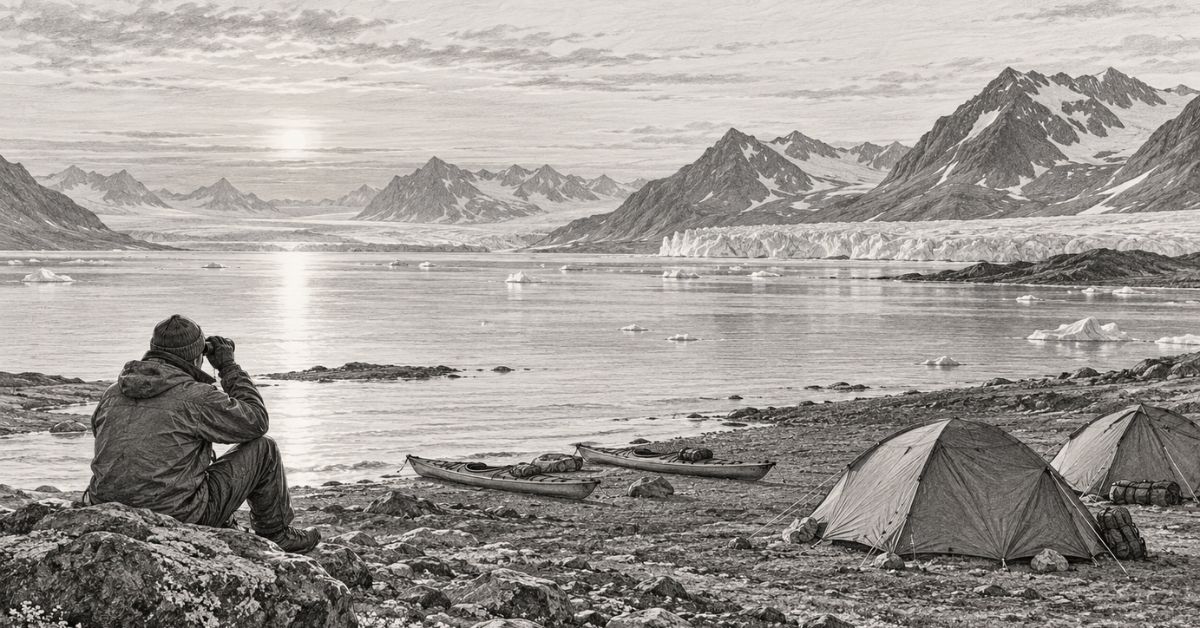
On the four-day Ymerbukta wilderness camp offered by Svalbard Wildlife Expeditions, guests share polar-bear watch as well as the cooking and washing up. The company asks prospective travellers to consider whether they are comfortable getting out of bed at three in the morning. It is a useful detail to encounter before booking. The photographs may have sold you the glacier. The roster needs your attention too.

For an Australian accustomed to checking a campsite for ants, this is a considerable adjustment. There is also something appealing about a holiday that gives you a job. You have to learn enough about the place to be useful to the people beside you.

Longyearbyen, the base before the crossing

The journey begins in Longyearbyen, on Spitsbergen, the largest island in Norway’s Svalbard archipelago. At about 78 degrees north, the town sits beside Adventfjord, with steep mountains around it. It has restaurants, shops and a cultural life, along with the practical services of a working community. Visit Svalbard traces its beginnings to coal mining, and records that Mine 7, the last Norwegian coal mine near town, operated until summer 2025.

It is tempting to treat somewhere this far north as a stage set for your arrival. People have groceries to buy here. The town is also where an expedition can gather its equipment and make the necessary arrangements before heading out. Appreciating both uses helps keep the traveller’s enthusiasm in proportion.

Across Isfjorden to Ymerbukta

Beyond it lies an awkward geography for anyone who likes to hire a car and improvise the rest. The Ymerbukta trip crosses Isfjorden by boat. The operator describes a crossing of about two hours, followed by setting up camp and a first outing in kayaks. Esmarkbreen, the glacier, is part of the reason to come. Later, there is a guided walk on the ice and scope for a longer mountain hike, with Värmlandsryggen ridge among the possibilities.

Four days gives the visit enough time to develop beyond arrival and departure. It also leaves some room for the weather to have its say. A fixed camp becomes a base from which to explore, rather than another place to pack up each morning.

A guide’s view of the place

One guide who has explained the attraction is Nanna, identified by her first name in an October 2020 interview reproduced in the company’s expedition diary. She had first visited Svalbard in 2014 and studied outdoor recreation. Asked about her favourite trips, she included the Ymerbukta camp, where guests could kayak at a safe distance from the glacier, walk on the ice and hike. She also liked a simpler walk, Blomsterdalshøgda.

That second choice is reassuring. A good day outdoors need not involve the hardest thing on the booking page.

In the same interview, Nanna advised guests to read the trip description and ask questions, especially about fitness and equipment. Her enthusiasm came with an expectation that people would choose something they could manage. It is advice that can sound obvious until the view in the photograph begins doing your thinking for you.

Fitness, ground and camp routines

The four-day camp is advertised as requiring good fitness, although previous kayaking or glacier-walking experience is not necessary. Training is provided. Visit Svalbard’s listing describes rough ground, including sand and rocks, and says guests participate in daily camp routines.

Being a beginner and being unprepared are quite different circumstances. You can arrive willing to learn a new skill while already knowing how your knees behave on uneven ground. Honest questions before departure are considerably easier than a discovery halfway through a hike.

Light, weather and clothing

Summer helps with the light. Svalbard’s bright season makes boat journeys and walking possible in a setting many people associate almost entirely with snow. The midnight sun lasts into late August. Later in that month and through September, the evenings begin to darken and the plants turn towards their brief autumn. Migratory birds give the summer a busier animal life than winter, while small plants add colour to the tundra.

There is a reason to spend time looking down as well as across the bay. A mountain can fill the background of every photograph and still leave you knowing very little about the ground you stood on to take it. Staying in one area gives you another chance to notice what you hurried past yesterday.

The daylight also needs separating from the temperature. Visit Svalbard’s clothing guidance gives an average of 3 to 7 degrees Celsius for the summer months, which it defines there as mid-May to September. It recommends warm layers, windproof clothing, a hat and mittens. Melting snow and ice raise rivers and streams, adding wet crossings to the practical questions a walking party may face.

An Australian summer wardrobe will require substantial revision.

Packing, boots and cold-water gear

Packing for a camp also takes a little more conversation than packing for a hotel. Establish what the operator supplies, what you carry yourself and which items must fit properly before departure. Boots deserve particular attention. There is limited entertainment value in discovering that yours rub, even with a glacier available to distract you.

Cold-water kayaking introduces its own equipment. The kayak clothing supplied for this camp includes a drysuit and life jacket. Glacier equipment is included too. These are things to learn to use, with guidance, before concentrating on the scenery.

A traveller’s account from elsewhere around Longyearbyen gives a useful glimpse of how that instruction changes a day. Writing for Earth Trekkers about a June 2018 outing across Adventfjord and up Hiorthfjellet, Julie Rivenbark described preparations involving drysuits and dry bags. Her guide, Nanna, set a 2.30 pm turnaround time for the mountain. Snowy conditions could also have ended the ascent early. This was a separate day trip, rather than the Ymerbukta camp.

The detail worth carrying across is the deadline. In continuous daylight, there is still a time to turn around. A guide has a whole journey to manage, including the return, while a guest can become rather attached to the next ridge.

It takes some discipline to accept a limit while you still feel capable of continuing. That is part of what you are buying when you join a guided expedition. You get another person’s judgement, formed with more information than your own desire to reach the top.

Guides, glaciers and decisions

Svalbard Wildlife Expeditions says its guides assess where and how to travel on glaciers, and check weather, sea and ice conditions before travelling across fjords. Its safety guidance also stresses keeping the party together and carrying polar-bear protection.

On the glacier, the equipment and the decisions belong together. Crampons and a harness cannot tell you which route is suitable that day. A visitor can enjoy learning how to move on ice without mistaking a few hours of instruction for the ability to organise the next outing alone.

Polar-bear country

Back at camp, the watch makes the same point in a more stationary way. The Norwegian Polar Institute warns that bears can be encountered in summer on beaches, in valleys and on glaciers. Its advice on camps includes choosing places with good visibility and avoiding locations where bears have recently been seen. It also explains that food smells can attract bears, making storage and waste handling part of camp safety.

This gives the washing up a significance it rarely enjoys at home. Camp routines deserve attention even when the weather is lovely and everyone would prefer to keep looking at the water. A guided trip lets you take part within an organised system, with the briefing defining your responsibilities.

The rules protect the animal as well. Changes introduced on 1 January 2025 set a minimum distance of 300 metres from polar bears, increasing to 500 metres from 1 March to 30 June. The Governor’s guidance also prohibits unnecessarily disturbing, attracting or pursuing them. For someone walking in the field who discovers a bear at close range, the requirement is to retreat. The guidance specifies exceptions to that retreat obligation for occupied facilities, including tents.

Changing plans, staying flexible

A bear in the area may mean a change of plan. Visit Svalbard’s camp listing explicitly allows for returning to Longyearbyen and doing day trips instead. Weather, ice and the group’s capabilities can alter the itinerary too.

Read that condition before paying. If your measure of success depends on completing every advertised activity, you have given the guide a difficult audience. Returning without the expected photograph may be the result of a sensible decision made early enough.

There are arrangements behind the camp that guests will never see. Commercial tourist camping requires permission from the Governor, with applications due at least four weeks beforehand. The Governor’s current travel guidance requires an organised, vigilant polar-bear guard at camps subject to application. It also explains that travel requirements depend on the activity and the area.

The regulatory picture is developing. Field Operation Safety Regulations took effect on 1 January 2026. The Governor says the requirement for tourist businesses and field operations to use approved Svalbard guides outside inhabited areas starts on 1 July 2027. The regulations also address rescue-cost insurance. Anyone planning a future trip should ask the operator how the rules applicable to their departure are being met.

That is a reasonable booking question. So are questions about equipment, the demands of the walking and what happens if conditions prevent the camp from operating. Clear answers make it easier to arrive with realistic expectations.

Leave no trace, even here

There are smaller obligations once ashore. Visit Svalbard asks travellers to leave flowers unpicked, avoid disturbing wildlife and leave no lasting signs of their stay. The Governor’s travel guidance explains that traces of human activity from before 1946 are automatically protected, with further protections for graves and certain remains. Old objects belong where they are found.

An apparently empty place can contain quite a lot that a visitor should leave alone. Looking closely becomes a more satisfying occupation when it does not end with putting something in your pocket.

The Arctic is changing

Nor is the ice a permanent backdrop. Copernicus identifies Svalbard as one of the fastest-warming places on Earth, reporting warming of around 1.5 to 2 degrees Celsius per decade over the past 30 years in its European State of the Climate 2025 material. A visit offers a chance to learn about a changing environment, although arriving there is hardly a contribution to fixing it.

For now, the practical attraction of Ymerbukta remains the time it allows. You can spend several days in a small area, learn unfamiliar equipment and become better company in a camp. There is room for a walk to occupy more of your attention than arranging the photograph afterwards.

If a turn on watch is part of your night, the guide will explain what you need to do. Then the rest of the group can sleep. You have warm clothing, a clear responsibility and a stretch of Arctic daylight to pay attention to.
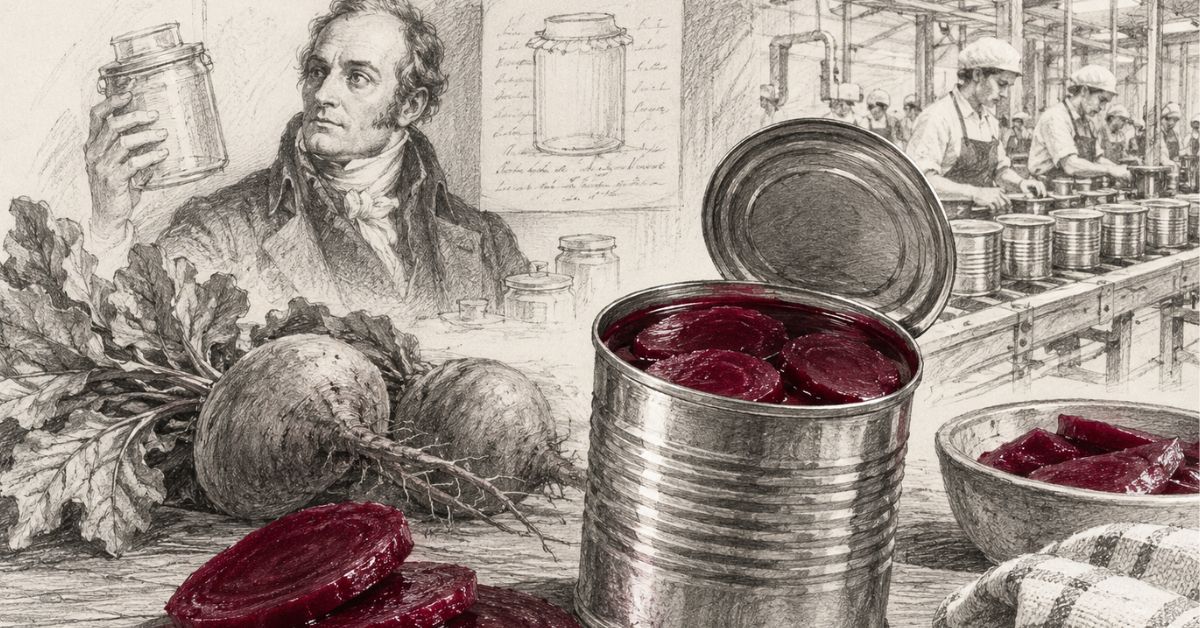
How Can a Tin of Beetroot Last for Three Years Without Going Bad?

By Jack Mercer – Rabbit Hole Fisherman

Leave a fresh beetroot in the kitchen long enough and it will eventually be
fit for the compost. Put it through a cannery, however, and it can spend years
in a cupboard without refrigeration. The explanation takes us from a French
inventor working more than 200 years ago to some surprisingly sophisticated
food science. And it turns out that the vinegar in your beetroot is doing more
than making your sandwiches taste better.

In This Story

There’s a peculiar sort of archaeology that takes place in the average
Australian pantry. Somewhere behind the pasta, the half-used packets of rice
and the bottle of sauce nobody particularly likes, you find a tin of beetroot
that appears to have been purchased during a previous era of your household’s
history.

Perhaps it was intended for a barbecue. Perhaps somebody was going through a
phase of making proper hamburgers, the Australian kind with beetroot and an egg
threatening to slide out the side.

Either way, the tin has been forgotten.

You turn it over, look at the date and discover that the manufacturer expected
it to last considerably longer than you remembered.

The beetroot was harvested, cooked, packed and sealed years ago. Yet,
assuming the food was properly processed and the can has remained intact and
appropriately stored, it may still be perfectly suitable for lunch.

Fresh beetroot is considerably less accommodating. It can survive for a while
under good storage conditions, but leave it long enough and moisture loss,
microbial growth and the vegetable’s own biological processes will eventually
take their toll.

The canned version has somehow escaped most of that trouble.

To understand how, it’s worth meeting a Frenchman who was trying to solve much
the same problem before anyone had a satisfactory explanation for why food
spoiled.

The man who preserved food before we understood germs

Nicolas Appert was a French confectioner and food preserver who spent years
experimenting with ways to stop food deteriorating. His work attracted the
attention of a government with a practical problem: armies and navies needed
provisions that could survive long journeys without becoming inedible.

In 1810, Appert published his findings in a book describing methods for
preserving animal and vegetable foods.

His approach involved putting food into containers, sealing them and heating
them. He worked with glass vessels, not the familiar supermarket tins that
would become widespread later.

The remarkable part is the timing.

Louis Pasteur’s work explaining the role of microorganisms in fermentation and
spoilage was still decades away. Appert had discovered a practical preservation
method without knowing precisely what was happening to the microscopic
organisms responsible for much of the deterioration.

He knew that the method worked, even if the science behind it remained
incomplete.

The method was far from perfect by modern standards, and early preservation
systems had limitations that later research would expose. Nevertheless, Appert
had helped establish the principles on which an enormous food industry would
eventually be built.

Within the same year, the English inventor Peter Durand received a patent for
food preservation using tin-plated iron containers. Metal cans gradually became
a practical alternative to glass, particularly for transporting provisions.

Two centuries later, a supermarket tin of beetroot owes something to both men.

What Appert couldn’t have explained is that heating food under controlled
conditions can destroy or inactivate microorganisms, while a properly sealed
container helps prevent fresh contamination.

Modern canneries have spent generations refining that process. The temperatures,
heating times, container designs and food formulations are all carefully
considered, because getting the balance wrong can produce anything from
unpleasantly mushy vegetables to a serious food-safety problem.

What happens to a beetroot in a cannery?

Imagine the beetroot arriving from the farm. It carries soil, has a tough outer
skin and looks very little like the neat red cubes that eventually appear on a
supermarket shelf.

Commercial preparation generally involves cleaning, trimming, cooking or other
preparation, and cutting the beetroot into the form required for the finished
product. The details vary between factories and products, and the order of
operations isn’t identical everywhere.

The prepared vegetable is packed with its liquid, and the food and container
undergo a validated preservation process.

That word, validated, matters. Food processors need evidence that the chosen
treatment will control the relevant microorganisms under the conditions in
which the food will be sold and stored.

Heating a vegetable until it is tender enough for dinner is one thing.
Producing a container of food that can remain safe on a supermarket shelf for
an extended period is another.

The seal is just as important as the heat treatment. A properly processed
product could be contaminated again if microorganisms were able to enter
through a faulty container.

Once sealed and processed correctly, the contents are protected from the
ordinary environmental contamination that helps make fresh food deteriorate.

There is a catch, though. Different foods require different treatment, and the
distinction has a great deal to do with acidity.

The vinegar has a second job

Australian beetroot has a long association with vinegar and sweetness. For
anyone who grew up eating beetroot on hamburgers or beside a plate of cold
meat, the sharp, sweet liquid is as familiar as the vegetable itself.

Look at the ingredients of a typical canned beetroot product and you may find
beetroot, water, sugar, salt and an acid such as acetic acid.

Acetic acid is the principal acid in vinegar. It contributes the tangy taste,
but it also changes the environment in which microorganisms would have to
survive and grow.

Food scientists measure acidity using the pH scale. A lower pH indicates
greater acidity, and one particularly important dividing line in food
preservation is pH 4.6.

The number matters because of Clostridium botulinum, a bacterium capable of
producing an extremely dangerous toxin under suitable conditions.

Its spores are unusually resistant to heat. In low-acid foods, simply boiling
the contents at ordinary atmospheric pressure cannot be relied upon to control
them.

Properly acidified foods, with an equilibrium pH of 4.6 or below, help prevent
the growth and toxin production of this organism when they are also properly
processed and sealed. The required processing method still depends on the
complete product and its formulation.

This is why a can of beetroot in an acidic liquid and a can of plain sweetcorn
may need quite different preservation processes.

Corn is generally a low-acid food. Commercial processors must account for that
when determining the necessary heat treatment, which may involve temperatures
above the boiling point of water under ordinary atmospheric pressure.

Acidified beetroot can be processed under different conditions, provided its
acidity and other safety requirements are properly controlled.

That distinction is also why recipes for preserving vegetables at home cannot
safely be improvised by guessing how much vinegar to add or how long to boil a
jar.

In a commercial cannery, the process must be designed around the actual food
being packed.

And what about the sugar?

It certainly contributes to the flavour. At high enough concentrations, sugar
can also help preserve food by reducing the water available for microorganisms
to use. Jam is a familiar example.

But the sugar content of ordinary canned beetroot shouldn’t be assumed to
provide that sort of protection on its own. The same applies to salt. Both
ingredients can influence the finished product, but their presence doesn’t
remove the need for an appropriate preservation process.

For a food that looks so uncomplicated on the plate, quite a lot depends on
getting the chemistry right.

Why doesn’t it turn into red porridge?

There is another puzzle here, especially for anyone who has ever left vegetables
boiling on the stove while distracted by something more interesting.

Heat softens vegetables. Too much heat can leave them barely recognisable.

Yet canned beetroot usually emerges in reasonably distinct slices or cubes,
soft enough to eat but firm enough to hold together.

Plant tissue gets much of its structure from cell walls and the substances that
help bind cells together, including pectin. Cooking alters those structures,
which is why a raw beetroot feels so different from a cooked one.

Food processors must balance the treatment needed for safety against the texture
customers expect. The balance varies with the vegetable, its size, its
preparation and the product’s formulation.

Some processed vegetables use permitted firming agents to help preserve their
texture. Others rely on the natural properties of the vegetable and the way it
is processed.

A glance at the ingredients can help establish which applies to a particular
product.

Beetroot is also rather generous with its colour. The red liquid that stains
your fingers, the chopping board and occasionally your shirt contains pigments
called betalains, which give the vegetable much of its characteristic
appearance.

These pigments can move into the surrounding liquid and are affected by
processing conditions, including heat and acidity.

So the liquid in the can isn’t simply a flavouring mixture that happens to be
red. Some of that colour has come from the beetroot itself.

It also explains why the vegetable and the liquid may change in appearance over
time without that change necessarily indicating spoilage.

Is the old beetroot still nutritious?

The common assumption that fresh vegetables must always be nutritionally
superior to canned ones doesn’t survive much scrutiny.

There are differences, certainly, but they depend on the vegetable, the nutrient
and what happens to the food between harvest and consumption.

Heat-sensitive vitamins can be reduced during processing. Vitamin C is one
example, although the extent of any loss depends on the conditions involved.

Minerals are generally more stable under heat, while some water-soluble nutrients
may move from the vegetable into its packing liquid.

Fresh produce has its own complications. Nutrient levels can change during
transport, storage and cooking, particularly when vegetables spend extended
periods between harvest and the dinner table.

Canning also has a substantial practical advantage: it makes vegetables
available when fresh produce is expensive, out of season or inconvenient to
prepare.

None of that means a three-year-old tin contains precisely the same nutrients as
it did when it left the factory. Some components may deteriorate during storage,
and flavour, texture and colour can change.

Food safety and eating quality follow different clocks.

A properly preserved product may remain microbiologically safe after its flavour
or appearance has begun to decline.

The date on the container helps consumers understand the manufacturer’s
expectations, although there are some subtleties to Australian date-labelling
rules.

The date on the bottom isn’t always an expiry date

Australian food labels distinguish between best-before and use-by dates.

A best-before date generally concerns the period during which food is expected
to retain its quality, assuming appropriate storage. A product can sometimes
remain safe and suitable after that date, although its quality may have
declined.

A use-by date has a different meaning. Food carrying one should not be eaten
after that date.

Some shelf-stable foods with a shelf life of two years or more are exempt from
mandatory date marking under the Food Standards Code, although manufacturers
may still choose to provide one.

The condition of the can matters independently of any printed date.

A container that is swollen, leaking, badly rusted or damaged around a seam may
no longer be safe. Serious damage can compromise the barrier that protects the
food from contamination.

Nor is it wise to rely on a sniff or a tentative taste to determine whether
suspicious canned food is safe. Some dangerous contamination cannot be
reliably identified that way.

The sensible approach is to follow the manufacturer’s instructions and discard
cans showing warning signs.

Once a can is opened, its long shelf life is over. The contents are exposed to
the environment and need appropriate refrigeration and handling, just like
other perishable foods.

The technology that kept the beetroot stable for years depended on the food
remaining in its correctly processed, sealed container.

A familiar name from North Brisbane

For Queensland readers, Golden Circle provides a local connection to the
history of food preservation.

Its cannery opened at Northgate in North Brisbane in 1947, at a time when
processing locally grown fruit and vegetables was a substantial part of the
state’s manufacturing economy.

The Northgate factory continues operating, and Kraft Heinz says it now produces
over 150,000 tonnes a year of canned pineapple, fruit juices and cordials
.

Golden Circle’s history is a reminder that the ordinary canned foods we keep in
our cupboards come from an industry requiring considerable engineering, technical
knowledge and agricultural organisation.

There is a separate story to be told about how Australian food manufacturing has
changed. For the moment, though, the tin of beetroot offers enough to think
about without following it all the way through the international food trade.

The next time you find an old tin

Appert’s early experiments required an extraordinary amount of patience. He had
to work out which combinations of heating, sealing and storage actually kept
food from spoiling, long before microbiologists could explain the results.

Today, a commercial processor can measure acidity, specify heating conditions,
test seals and validate a preservation process using knowledge that would have
been unavailable to him.

The result is so commonplace that most of us scarcely notice it.

We buy beetroot, put it in the cupboard and forget about it until the next
barbecue.

The tin might have been sitting there for three years, but the real question
isn’t how the beetroot has managed to survive for so long.

It’s how much work went into making sure it could.

How Queen Made Bohemian Rhapsody

By Jack Mercer – Rabbit Hole Fisherman

Six minutes, no chorus, and a record nobody quite knew what to do with:
How Queen made Bohemian Rhapsody

There are songs that sound unusual the first time you hear them. Then there is Bohemian Rhapsody, a song so unusual that after 50 years of weddings, stadiums, car stereos, films and drunken singalongs, we’ve somehow stopped noticing.

In This Story

Listen to it as though you’ve never heard it before. It runs for almost six minutes, there’s no conventional chorus, and a piano ballad gives way to an operatic section populated by massed voices before crashing into hard rock and retreating into a surprisingly quiet ending.

In 1975, Queen wanted this to be a single, and plenty of people had doubts. The remarkable part isn’t simply that Bohemian Rhapsody succeeded. It spent nine weeks at No. 1 in Britain and eventually became the UK’s biggest-selling single originally released during the 1970s.

The remarkable part is how four musicians and a producer managed to get something this complicated onto tape in the first place. There was no computer screen in front of them, and there wasn’t even enough tape.

Freddie Mercury already knew where he wanted to go

By 1975, Queen weren’t unknowns looking for their first break. Freddie Mercury, Brian May, Roger Taylor and John Deacon had released three albums. Sheer Heart Attack had been a substantial success, and Killer Queen had given them a major international hit.

But Bohemian Rhapsody was another proposition altogether. Producer Roy Thomas Baker had worked on Queen’s first three albums, and he later recalled Mercury playing him the new composition on piano before recording began. The song was already conceived in sections, but what nobody yet knew was quite how enormous one of those sections was going to become.

After about three weeks of rehearsal, recording began at Rockfield Studio in Wales on 24 August 1975. Work would eventually spread across another four studios, which is a reminder of just how difficult the band’s ambition was to contain.

Think about what Queen were attempting. Today, a musician constructing a six-minute recording from radically different sections can see the entire song laid out on a computer, with parts moved, copied, extended and layered almost without limit. Queen had 24-track analogue tape and scissors.

They actually left a hole in the song

This might be my favourite part of the whole story. Queen initially recorded Bohemian Rhapsody in pieces. The piano-led section was recorded conventionally enough, and the heavy rock section was treated almost like a separate song. But the operatic section in between wasn’t there yet.

So they left approximately 30 seconds of blank tape for it. Then Freddie Mercury kept having ideas. The opera got bigger, thirty seconds wasn’t enough, and Baker’s solution was wonderfully physical: they spliced more tape into the reel. And then more.

What we now regard as an inevitable part of one of the world’s most familiar songs was literally expanding because Mercury kept expanding the idea. Baker remembered the reel eventually becoming a patchwork as additional pieces were inserted, and the operatic section alone took about three weeks to record.

Baker pointed out the absurdity of that number: in 1975, three weeks was roughly the amount of studio time that might ordinarily have been spent making an entire album.

How did Queen create all those voices?

This is where the limitations of 1975 become part of the sound. Mercury, May and Taylor created the enormous vocal effect by repeatedly recording harmonies and combining — or “bouncing” — them onto fewer tracks, freeing space so that more vocals could be added. Then they did it again, and again.

Every bounce came with a price. Analogue copying introduced degradation and distortion, which is normally something an engineer tries to avoid. On Bohemian Rhapsody, it became part of what we’re hearing.

Baker described some vocal elements reaching multiple generations of copying before the various layers were finally combined. The master tape was subjected to so much work that transfers eventually had to be made to continue the process. There’s something wonderfully appropriate about this.

One of the most elaborate recordings of the 1970s wasn’t created because Queen had unlimited technology. Part of its character came from four musicians and their production team pushing limited technology until it did things it wasn’t particularly designed to do.

Nobody heard the complete song until it was assembled

Even that sounds strange now. Assistant engineer Gary Langan was 18 when he worked on the final mix at SARM Studios, and his job included assembling the multitrack master from the song’s three very different sections.

Until those pieces were physically put together, Langan recalled, nobody had really heard the whole six-minute composition as one continuous recording. Imagine that first playback: not the Bohemian Rhapsody we’ve all heard hundreds of times, but a new one, with no cultural baggage, no Wayne’s World, no Freddie Mercury biopic, no stadium full of people singing along, and no knowledge that millions of people would still be listening half a century later.

Just six peculiar minutes coming through the studio speakers. And then another problem presented itself: what on earth do you do with it?

Why wasn’t Bohemian Rhapsody shortened for radio?

A six-minute single in 1975 was a difficult proposition, and there were discussions about editing it. John Deacon later recalled that the band considered shortening the track and tried possibilities, but concluded that removing sections damaged the song. An edit eliminating major sections was prepared, but ultimately abandoned.

That decision now seems obvious. Of course you don’t cut Bohemian Rhapsody. But that’s because we know Bohemian Rhapsody. In 1975 they didn’t.

Official Charts notes that its 5 minute 55 second running time was intimidating for radio programmers and that people around the record doubted its prospects as a single. Then a radio DJ got hold of it.

Kenny Everett helped turn the problem into an event

Kenny Everett was one of Britain’s best-known radio personalities and a friend of Mercury’s. Before the single had officially been released, Everett obtained a copy, and played it. Then played it again.

Official Charts records that Everett managed to play the track 14 times over two days, helping create public demand before people could even readily buy the record. It’s difficult to imagine a better answer to the argument that a song is too long for radio.

Don’t shorten it. Play the entire ridiculous thing over and over until listeners start asking where they can get it.

Bohemian Rhapsody was released in Britain on 31 October 1975, and by the chart dated 29 November, Queen were at No. 1. They stayed there for nine weeks.

And then Queen had to work out how to promote it

There was another practical problem. Queen couldn’t simply appear on every television program and recreate the recording, because the operatic section alone depended upon studio layering that four people standing on a television stage couldn’t reproduce faithfully.

So Queen made a promotional film. Directed by Bruce Gowers, it cost about £4,000 according to Baker’s recollection and was produced quickly.

You’ll sometimes read that Bohemian Rhapsody invented the music video. That’s too neat. Promotional music films existed long before Queen made theirs. What Bohemian Rhapsody helped demonstrate was something slightly different and probably more important: a purpose-made film could allow a band to promote a record repeatedly on television without having to be physically present every time.

Queen’s clip became part of the record’s identity, and within a few years that idea would become standard music-industry machinery.

What is Bohemian Rhapsody actually about?

Here we need to resist another temptation. People have been trying to decode the song for decades. There are interpretations involving guilt, confession, identity and Mercury’s private life. Some are interesting, and some have been repeated so many times that speculation starts masquerading as established fact.

We don’t need to choose one. Mercury was perfectly capable of explaining himself when he wanted to, and Bohemian Rhapsody isn’t a song he definitively unpacked into one authorised meaning for everyone else.

For this story, that’s enough. Perhaps part of the song’s longevity comes from that ambiguity. Millions of people know the words, but that doesn’t mean millions of people agree about what they mean.

Then something extraordinary happened: it came back

Nine weeks at No. 1 would have been enough to put Bohemian Rhapsody into British music history. But the song acquired another life.

After Freddie Mercury died in November 1991, Bohemian Rhapsody was reissued and returned to No. 1 in Britain. Official Charts records the song reaching the top in both 1975 and 1991; it ultimately accumulated UK sales of more than 2.6 million and became the biggest-selling single originally released in the 1970s.

Then came Wayne’s World in 1992 and that car scene. Another generation discovered it, and the strange cycle continued. Something that sounded almost absurdly ambitious in 1975 gradually became so familiar that children born decades after Mercury died could recognise it within seconds.

Perhaps that’s the strangest part of all. Put aside the sales for a moment, forget the awards, and forget where it places on lists of the greatest songs ever recorded. Go back to the record itself.

Nearly six minutes. No conventional chorus. A ballad. An opera. A hard-rock section. An ending that doesn’t give you the enormous final chorus almost any modern producer would surely demand.

Three weeks spent just constructing the operatic middle. Lengths of analogue tape physically added because the section wouldn’t stop growing. Vocals copied and recopied because there weren’t enough tracks available. A single considered too long for conventional radio treatment.

It is an absolutely ridiculous recipe for a pop hit, and that’s perhaps why Bohemian Rhapsody still matters. Queen didn’t discover a clever formula and execute it perfectly. They made something for which there wasn’t really a formula.

Fifty years later, the most extraordinary thing is that it no longer sounds strange to us. We’ve heard it too many times.

Maybe tonight, put on Bohemian Rhapsody again. But this time, try to forget that you know what happens next.

The River That Refused to Become a Dam: Rafting Tasmania’s Franklin River

By Jack Mercer – Rabbit Hole Fisherman

A rafting expedition down Tasmania’s Franklin River means days of white water, rainforest camps and carrying equipment around rapids too dangerous to run. The journey remains possible because Australians fought to keep the river flowing.

In This Story

The paddle is only part of the job.

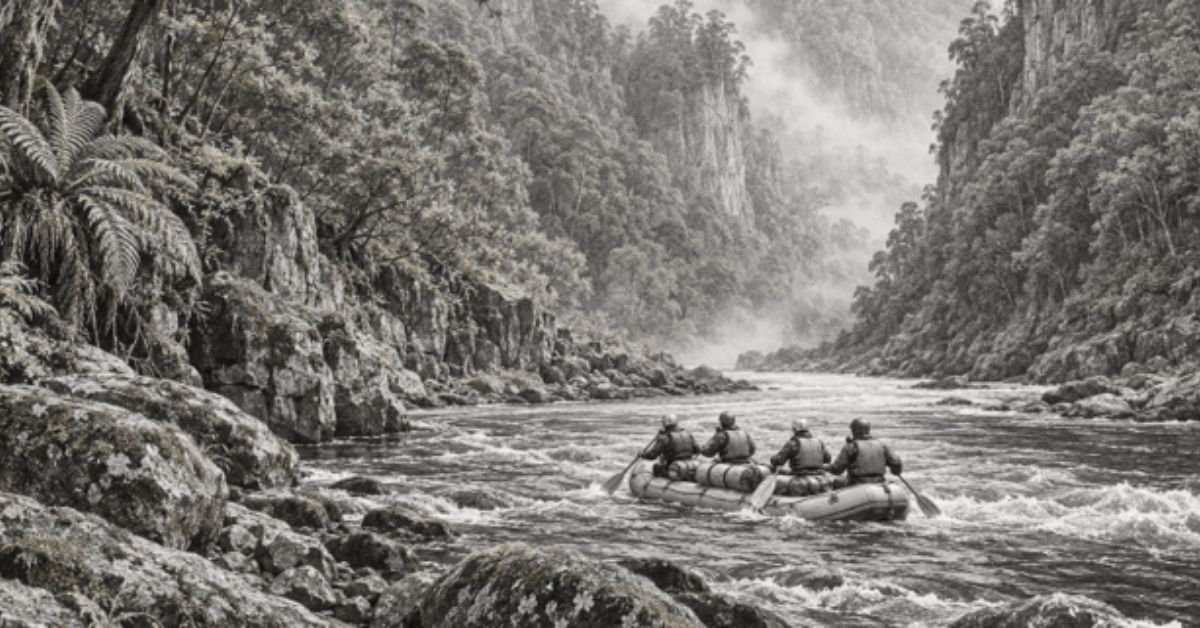
On Tasmania’s Franklin River, there are places where the sensible way downstream involves getting out of the raft. Food and camping equipment must be moved past an obstacle. The boat needs getting through too. A stretch of white water that looks magnificent in a photograph can turn out to be somewhere you spend quite a while carrying things.

That work belongs in the picture. The Franklin offers deep gorges and rainforest, but travelling through it asks for more than an appetite for scenery. Tasmania Parks and Wildlife Service describes it as one of the state’s most remote and committing rivers. Water levels can change quickly, and hazards include log jams that force paddlers to go around them. Experienced paddlers or a qualified, experienced guide are needed.

For people joining a guided trip, the attraction is partly that sustained involvement. You help move the expedition. Decisions about water and weather have consequences for the whole group, whose sleeping bags and dinner travel in the boats with them.

There is a famous history here, of protests and a dam that was never built. Yet the river has a much more immediate way of holding your attention. Before anyone can think about the next campsite, they have to get there.

A river with a timetable of its own

The usual full-river expedition begins on the Collingwood River, reached from the Lyell Highway, and follows it into the Franklin. Downstream lies the Gordon River, where onward transport carries rafters towards the west-coast town of Strahan. The International Rafting Federation describes a typical expedition as taking eight to ten days.

Those days matter. An afternoon’s activity can fit around the rest of a holiday. A week or more on a river begins to organise the holiday around itself. The gear you brought is the gear available. Another layer of clothing has to be in a bag, rather than back in a hotel room.

Water by Nature Tasmania offers full-river trips of seven or eight days, with longer versions incorporating a walk towards Frenchmans Cap. Its full-river description puts the navigable journey at around 110 kilometres and warns that low water and flood conditions can occur within days of each other. Duration and route are expedition arrangements, rather than a promise about what the water will do.

It would be easy to assume that less water means an easier journey. The operator’s seasonal guidance complicates that assumption. Lower levels can mean extra portaging and harder paddling, making a dry period physically demanding. Rain changes the problems again.

A map shows where the river goes. It cannot tell you how much carrying a particular week will require.

The human judgement behind those decisions is part of the adventure. A guide has to assess the passage available today, with this group and this load. An excellent memory of a rapid is useful; it still needs checking against the water actually running through it.

What the guide expects

In a published interview with Tasmanian Expeditions, rafting guide Abigail Nimui gives a practical account of the passenger’s role. She says participants need moderate fitness and should expect to scramble over uneven or slippery ground, help carry equipment and take part in camp work. Previous paddling experience is not required for that company’s guided trip, but contributing to the paddling is.

Nimui also explains that portaging involves getting people, boats and equipment safely below rapids that cannot be run. The arrangements vary with the water level. Her interview is a useful corrective to the idea that booking a guide makes the passenger’s job entirely passive.

It sounds like a fair exchange. You bring enough fitness to help; the guides bring the judgement that gives the effort a purpose. Someone who can tell you when to stop paddling may prove considerably more useful than someone urging you to paddle harder.

The Great Ravine gives that judgement plenty to do. Franklin River Rafting’s published itinerary describes several kilometres containing a concentrated sequence of major obstacles. Progress combines rafting with portaging and lining, the controlled movement of boats using ropes. The Churn is listed as a compulsory portage.

A long day can therefore cover a short distance. You may have worked hard without moving very far down the map, which is an awkward discovery for anyone accustomed to measuring progress by kilometres.

But a gorge is a place to travel through on its own terms. The safe route around one obstacle takes as long as it takes. Rushing to make the numbers look better would be a poor bargain.

Weather that changes the day’s work

The Franklin’s changing levels are more than a qualification tucked beneath an itinerary.

Travel writer Steve Madgwick documented a ten-day expedition in The Wilderness Society’s journal. He reported that the river rose two metres overnight on the third day, prompting a rest day. Persistent rain also prevented his group’s planned ascent of Frenchmans Cap. Those are observations from that particular journey, rather than a forecast for the next one.

They explain why a rest day can be a decision made for you. The expedition has to work with the river that arrived overnight.

The consequences reach into the less glamorous business of camping. Warmth and dry equipment become things to organise carefully. Water by Nature’s equipment list includes full-length wetsuits, personal dry bags, camping shelters, a satellite phone and an emergency beacon. The packing list reads rather differently from one for a riverside picnic.

The dry bag is an ordinary object worth paying attention to. It separates clothes and bedding from the water you are spending days travelling on. Closing it properly is a small task with a large audience later, principally yourself when you need something dry to wear.

A guided expedition makes these details manageable, but it cannot make them irrelevant. There is pleasure in that. The day has a set of practical jobs, and finishing them makes the evening better.

Under the trees

The rafting is only one reason to go. Along the banks is wet temperate rainforest, within a national park that also contains eucalypt forest and buttongrass moorland. The park protects Aboriginal sites recording occupation during the last ice age and remains of deep significance to Tasmanian Aboriginal people. Kutikina Cave is among the places returned to the Aboriginal community under the Aboriginal Lands Act 1995.

So the language of an untouched wilderness needs care. A visitor can be far from a road without being outside human history.

In ABC’s reporting on the Franklin campaign, palawa leader Michael Mansell explains the importance of Kutikina and his concerns about others using Aboriginal heritage to advance their own causes. His account centres ownership and connection to ancestors, even as he agrees that the place needed protection.

That perspective gives the journey a history deeper than the one many Australians first remember. The river’s public fame grew enormously in the early 1980s. Its cultural importance did not begin when it appeared on a protest sticker.

For rafters, evenings take place in riverside camps, sometimes beneath overhangs or on river flats. Water by Nature describes carrying the expedition’s shelter and food in the rafts, with limited comforts and no ordinary mobile reception along the remote journey.

The campsite is where the load becomes useful. Things carried awkwardly past a rapid become dinner, shelter and somewhere to sleep. Even a modest camp represents a satisfying amount of completed work.

There is no need to dress that up as an escape from civilisation. It is a few days spent living with equipment you helped get there, beside a river you are learning to pay attention to.

The dam downstream

The proposal that threatened the Franklin is sometimes described as though somebody planned to put a wall across the river itself. The main scheme was a dam on the Gordon River, downstream of its junction with the Franklin. Its reservoir would have backed up into the Franklin valley. [12]

The location explains the name Gordon-below-Franklin. It also explains why saving one river required stopping construction on another.

The National Museum of Australia dates the proposal to 1978. Cheap electricity and industrial development were arguments for proceeding. Conservationists opposed the flooding, and the dispute spread well beyond Tasmania. A blockade began in December 1982 and continued into March 1983. Bob Brown became one of its best-known figures.

It is tempting to read the outcome backwards, as if the protesters were performing a victory already arranged. They were trying to change a decision with machinery and government backing behind it. Opposition meant organising people, sustaining public interest and taking risks whose outcome remained uncertain.

After winning the March 1983 federal election, Bob Hawke’s government moved to protect the World Heritage area. The dispute reached the High Court. On 1 July 1983, the court’s decision upheld the Commonwealth’s intervention, stopping the project.

For a present-day rafting party, that history has a physical consequence: the gorge is still a gorge through which a river runs. The obstacle ahead still needs inspecting. A place that might have disappeared beneath a reservoir continues to make demands on anyone travelling through it.

There were livelihoods at stake in the dispute too. ABC’s retrospective includes the account of contractor Kevin Bailey, who had invested in machinery expecting work on the dam and faced an uncertain future when it was stopped. Acknowledging those consequences makes the history more honest. It does not lessen what was saved.

The river’s quieter work

Farther downstream, the pace changes. Franklin River Rafting describes wider, quieter water on the Lower Franklin and a transition towards limestone country. Its expedition continues into the Gordon and finishes the rafting at Sir John Falls before boat transport to Strahan.

The paddling still has to be done. A current that has supplied so much drama can also leave a crew with an ordinary stretch of effort. Quiet water is good for looking at the banks, although the raft has a destination as well.

Rock Island Bend carries particular associations with the conservation campaign through Peter Dombrovskis’s photograph. It is also somewhere on the route, reached by travelling through the country around it.

A famous image gives people a place to recognise. An expedition supplies the stretches either side, including the hours that would never make a poster. Those hours are much of the reason for going.

Something to carry out

Keeping the Franklin wild involves present-day behaviour as well as remembering the campaign. Parks and Wildlife identifies the national park as a fuel-stove-only area, prohibits fires and asks visitors to follow Leave No Trace principles.

For the expedition, that is another practical obligation. The equipment brought in has to come out, along with the waste produced during the trip. The memory of an evening under the trees does not need to leave anything behind on the bank.

Anyone considering the journey should check operator requirements against their fitness and camping experience. A guided Franklin trip can accommodate people new to rafting, but the shared physical work remains part of it. Conditions determine the day’s decisions.

Over several days, you learn where your gear is and how to contribute. You also learn when the person reading the water needs everyone to listen.

At the next compulsory portage, the boats and bags still need moving. The sleeping gear you will want tonight is sitting among them.

Your “GREEK-STYLE” Feta May Not Be Greek. And It May Not Be Feta Either.

By Jack Mercer – Rabbit Hole Fisherman

There are two little words on supermarket cheese packets that most of us barely notice: “Greek style”. They look like marketing copy, but they do more than that. They quietly tell you what kind of cheese you’re actually buying, and where the argument over names, origin and identity begins.

In This Story

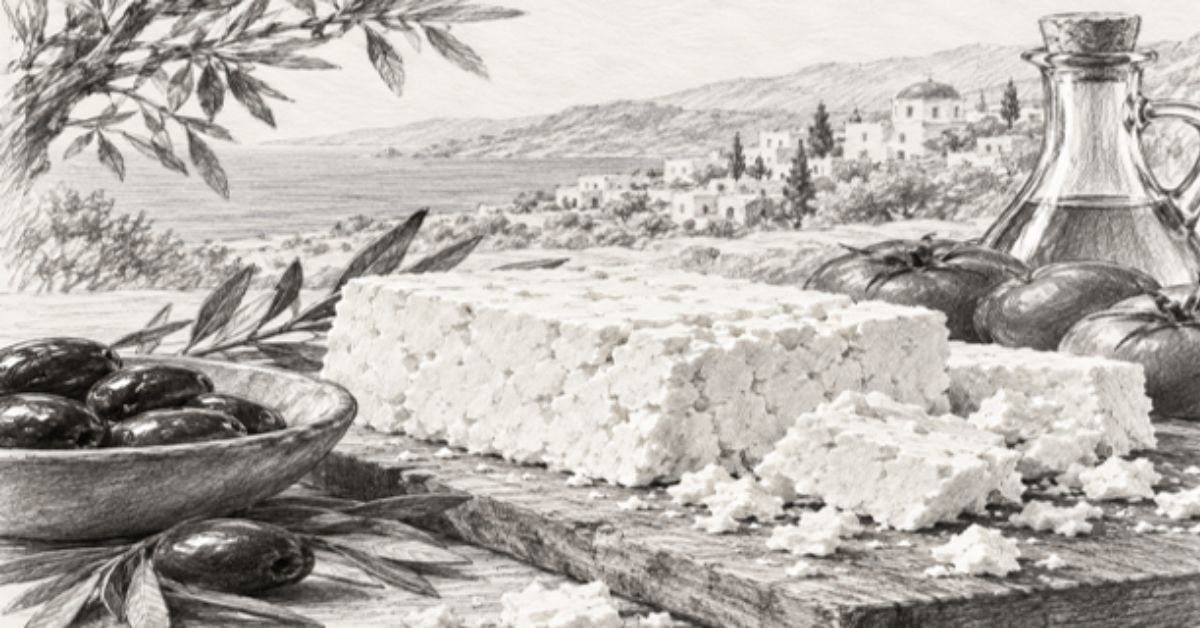
Next time you buy feta, don’t put it straight into the trolley. Pick up two packets and turn them over. One might be genuine Greek Feta PDO, made in Greece from sheep’s milk, perhaps with some goat’s milk added. The almost identical-looking block beside it might be Australian-made from cow’s milk.

Both are white and are salty. Both crumble over a salad. They both sit in the same supermarket fridge and, to most of us, both look like feta. But look at the front of the Australian packet and you may find two easily overlooked words: Greek style.

That word “style” is doing a surprising amount of work. It can separate a cheese made in Greece under rules governing its origin, milk and production from an Australian cheese inspired by it but made thousands of kilometres away, often from the milk of a different animal. And there’s another oddity: some Australian packets don’t even spell feta the same way. They call it fetta.

None of this is accidental. Behind one of the most ordinary cheeses in the supermarket is an argument involving Greek farmers, Australian cheesemakers, European food law and international trade negotiations. At the centre of it all is a deceptively simple question: who owns the word “feta”?

To answer that, we first need to understand what feta actually is.

Feta isn’t just a recipe

There is a fundamental difference between saying this cheese is made like feta and saying this cheese is Feta PDO. Within the European Union, feta is registered as a Protected Designation of Origin, or PDO, a status given to foods whose identity is tied to where they come from. Champagne is the obvious comparison. You can make excellent sparkling wine in Tasmania, South Australia or Victoria, but that doesn’t make it Champagne.

Under the European PDO rules, Feta has its own geographical and production requirements. It must be produced in specified areas of Greece, and the milk must come from sheep and goats of breeds traditionally raised in those areas and adapted to local conditions. Genuine Feta PDO can be made entirely from sheep’s milk or from sheep’s milk with goat’s milk added. What you won’t find in genuine Greek Feta PDO is cow’s milk.

The European Commission’s description of Feta PDO links the cheese to Greece’s landscape. Much of the country was historically poorly suited to widespread cattle farming, while sheep and goats could thrive in mountainous, hot and dry conditions. The animals graze on local vegetation, and that combination of breed, feed, environment and traditional cheesemaking became part of the argument that feta belongs to Greece.

Which makes a visit to an Australian supermarket rather revealing.

Turn the packet over

At the time of writing, Coles sells a Greek Feta PDO made in Greece. Read the ingredients and the first two are pasteurised sheep’s milk and pasteurised goat’s milk. Now pick up an Australian-made Greek-style fetta.

Riverina Dairy’s Greek Style Fetta is made in Australia from milk from its own farm at Corowa in New South Wales. Its first ingredient? Pasteurised cow’s milk. It also contains cream, salt, calcium chloride, rennet and cultures. Woolworths’ own Greek Style Fetta is also Australian-made and lists pasteurised cow’s milk as its principal ingredient.

There is nothing inherently wrong with that. These are cheeses made in the feta tradition rather than as Feta PDO. But it explains why two blocks of white cheese that appear to be doing exactly the same job can taste and feel quite different. They’re not necessarily made from the same animal’s milk in the first place.

Why does the milk matter?

Cow’s milk, sheep’s milk and goat’s milk aren’t interchangeable raw materials. Their composition differs, and that affects cheesemaking, texture and flavour. Traditional Feta PDO gets much of its character from sheep’s milk, with goat’s milk sometimes contributing to the blend. The European Commission describes genuine feta as salty and slightly acidic, and notes the slightly peppery character associated with the milk used to make it.

An Australian producer using cow’s milk is starting somewhere else. That doesn’t automatically make the resulting cheese inferior. In fact, some people may prefer the smoother or milder result. Riverina Dairy, for example, deliberately adds cream to its cow’s-milk Greek-style fetta and describes the result as having a smooth, creamy mouthfeel alongside the salty tang and crumbly texture consumers expect from this style of cheese.

So when two fetas taste different, it may not simply be that one manufacturer makes “better feta”. You may actually be comparing cheeses made from different milks.

Then there is the brine

The liquid surrounding feta can look like little more than salty packaging water. It isn’t. In traditional feta production, brine is part of making and maturing the cheese.

After the milk is coagulated, the curd is placed into moulds and allowed to drain without pressure. The cheese is removed, cut and salted. Ripening then takes place in stages. During the first stage, brine is added and the cheese is held under controlled temperature and humidity. It then continues maturing under refrigeration. Under the PDO production process described by the European Commission, the total maturation period is at least two months.

That helps explain why feta isn’t simply “white cheese in salty water”. The salt, moisture, cultures, milk and maturation are all involved in producing the cheese we eventually crumble onto dinner.

And that leads to the really contentious part.

Who gets to use the word “Feta”?

For years, Australia and the European Union have disagreed over geographical indications, the names associated with products from particular places. For Australian consumers this can sound like an obscure trade negotiation happening somewhere in Brussels or Canberra. It isn’t. It reaches directly into the supermarket fridge.

Australia and the EU concluded negotiations on a free-trade agreement on 24 March 2026. As part of the negotiated outcome, Australia agreed to protect hundreds of European geographical indications. One of them is Feta.

But Australian feta makers weren’t simply forgotten. The Australian Government says existing producers with a continuous history of making and labelling feta will be able to continue using the term under a grandfathering arrangement once the agreement takes effect. To qualify as a prior user, producers will need to demonstrate continuous, good-faith use for at least five years before the agreement enters into force.

There is an important qualification here. As of October 2026, the Australia-EU agreement has not yet entered into force. Negotiations are finished, but legal checking, signature, parliamentary processes and ratification still have to occur. DFAT says signature is expected in late 2026 or early 2027, followed by the necessary domestic processes.

So this isn’t merely a historical argument. Australia is in the middle of changing the rules.

Which brings us back to “Greek-style”

Those two little words suddenly make considerably more sense. A cheese can borrow the characteristics we associate with Greek feta without claiming to be a Greek product. And the spelling “fetta” gives Australian producers another way of distinguishing their product in the marketplace.

But the most useful distinction for the person standing in front of the supermarket fridge isn’t really the spelling. It’s the ingredient list and country of origin. Pick up the Coles Greek Feta PDO and you’re looking at cheese made in Greece from sheep’s milk and goat’s milk. Pick up Riverina Dairy Greek Style Fetta and you’re looking at an Australian cheese made principally from cow’s milk, with added cream.

They may sit centimetres apart. They may both crumble beautifully over the same salad. And they may both be delicious. But they are not the same cheese.

And perhaps that is what makes the word “style” so useful. Most of us probably walk past it without noticing. Once you know what it means, it tells quite a story.

A Forest Inside the Mountain

By Jack Mercer – Rabbit Hole Fisherman

In central Vietnam, Sơn Đoòng contains enormous passages, an underground river and a forest beneath its broken roof. Reaching it takes days on foot, and depends on the local knowledge that brought explorers to its entrance.

The forest grows where the ceiling fell in.

In This Story

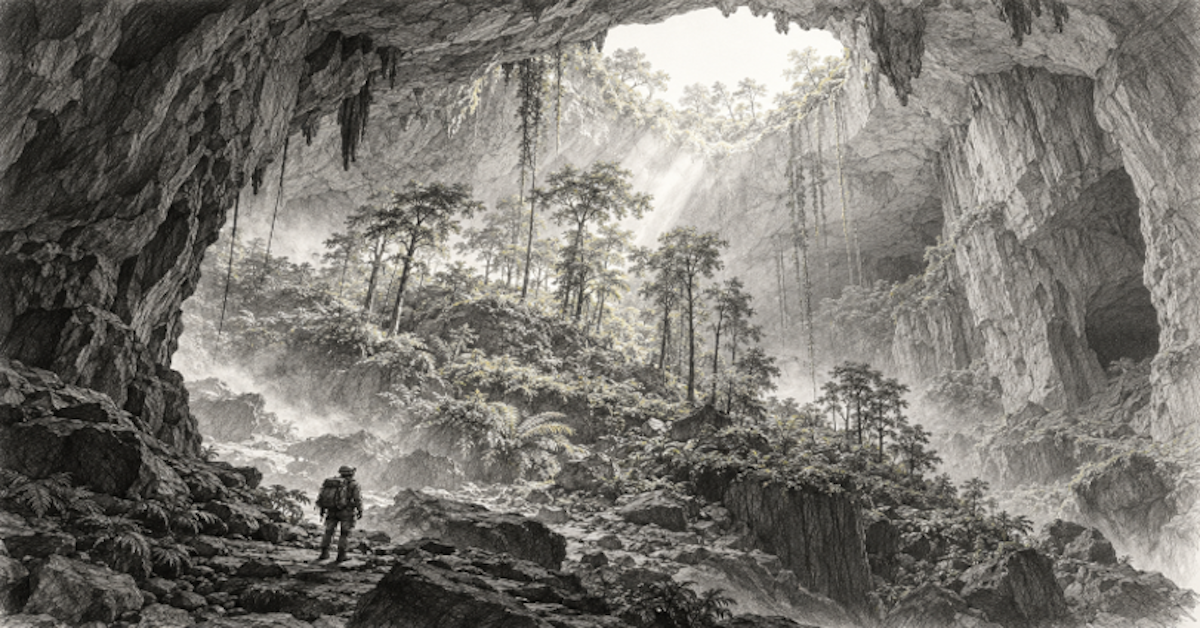
Deep inside Sơn Đoòng, in Vietnam’s Phong Nha-Kẻ Bàng National Park, daylight reaches through an opening in the mountain and trees rise towards it. Around this patch of green, the cave continues into darkness. The forest occupies a break in the roof of a much larger underground passage. Walking into the sunlight does not mean you have reached the way out.

That is an appealing complication. We tend to think of caves as enclosed places, with the world outside neatly separated from whatever lies within. Here the distinction becomes awkward. There is sky overhead, but a mountain around you. A forest belongs to the cave.

The place has a name, the Garden of Edam, bestowed by cavers whose appetite for a cheese joke survived a considerable amount of walking. Its trees owe their existence to sunlight entering through a collapsed section of roof, known as a doline. Some have slender trunks and grow unusually tall in their search for light.

The photographs invite a long stare. Then comes the question that gives this adventure its shape: how would you actually get there?

Long before there was an expedition to book, a Vietnamese forest worker named Hồ Khanh had to find the entrance twice.

The entrance he remembered

According to the discovery account published by expedition operator Oxalis, Khanh first encountered the opening in 1990. Caught in heavy rain while working in the forest, he sheltered beneath a cliff. From an opening came cold air and mist. There was a steep descent into the cave, and he lacked the equipment to investigate it. He went home.

It is easy, with the benefit of a famous photograph, to wonder why anyone would leave. But the photograph did not exist. Nor did the ropes, the survey or a guide explaining what lay below. Khanh had found a difficult opening in remote country while trying to make a living. Going down would have been a very different proposition from looking at it.

Years later, he told British caver Howard Limbert about the place. Finding it again proved difficult. Oxalis’s detailed account dates the successful return to 2008, after an unsuccessful search the previous year. Khanh recorded the route, and in 2009 led members of the British-Vietnamese expedition to the entrance.

There is something pleasingly stubborn about that interval. A cave large enough to become internationally famous could remain hard to locate. Its eventual appearance on maps depended on a man remembering what he had seen and going back through the forest to look.

Limbert’s own published account explains why the cavers were interested. They had explored nearby Hang En in 1994 and knew that its river disappeared into a valley where flood debris blocked access underground. Between the sinking water and its reappearance was a gap of roughly 10 kilometres in their map. Somewhere in the mountains, they expected a substantial continuation.

Khanh’s recollection gave them a way to reach it.

In April 2009, Peter MacNab was the first expedition member to enter Sơn Đoòng. Exploration and measurement followed, until a huge wall of calcite stopped progress. The team returned in 2010 with specialised climbing equipment; Gareth Sewell and Howard Clarke climbed the obstacle, opening the route towards an exit beyond it.

A year separates those two achievements. Even after the entrance had been found, the mountain still demanded another expedition.

A head torch has its limits

Sơn Đoòng is widely recognised as the world’s largest natural cave by volume. The published survey figure is 38.5 million cubic metres, with a length of nearly nine kilometres. The record concerns its enormous underground space; cave length is a different measurement.

Those numbers are accurate enough to repeat and difficult to picture. Cubic metres rarely improve a daydream. Put a person in the passage, however, and scale becomes much easier to understand: the person almost disappears.

Writer Mark Jenkins joined the 2010 expedition for National Geographic. His account describes a headlamp unable to reveal the full space above him, and the change when daylight through a roof collapse made the cave’s proportions visible. The experience required the light from outside to explain what the small lamp could not.

There is a practical limit to being impressed in the dark. You can know that a ceiling is far overhead without being able to see it. Distance becomes a matter for surveying instruments until daylight gives the eye something to work with.

Jenkins also recorded caver Jonathan Sims’s explanation of the first doline’s name, Watch Out for Dinosaurs. Sims and a companion had young sons and knew their dinosaurs; the vegetation and enormous opening recalled the setting of Arthur Conan Doyle’s The Lost World. The name came from a joke between explorers.

It has lasted rather well. A technical term can explain a roof collapse, but a warning about dinosaurs conveys something of the mood without asking the reader to inspect a geological diagram.

The actual explanation needs no prehistoric survivors. Rivers worked through the limestone along a fault, enlarging the passage over millions of years. Where the roof collapsed, sunlight entered. Oxalis’s geological account gives an estimated cave age of between two and five million years. The holes in the roof support vegetation and connect parts of the underground environment to the forest above.

The result rewards an ordinary kind of curiosity. Follow the water. Look at where the light reaches. Notice what can grow there.

The walk before the cave

For visitors, getting inside begins with walking through the national park. Oxalis’s current itinerary describes a six-day, five-night programme, including hotel nights before and after the field expedition. Its first trekking day covers about 14 kilometres, passing through Ban Doong and Hang En before reaching a forest campsite near Sơn Đoòng’s entrance. There are repeated stream crossings and steep sections.

Fourteen kilometres on a street would be a long walk. In this country, the distance comes with wet feet and attention to the ground. The attraction may be underground, but legs have work to do before anyone reaches it.

Ban Doong is home to a Bru-Vân Kiều community. Oxalis’s village history describes its establishment in 1992 after families moved from a settlement affected by flooding. The village occupies a place along the approach to the caves; for its residents, this valley is home.

That deserves a little more thought than the usual travel phrase about venturing into an empty wilderness. An expedition moves through country that other people know through daily life, work and family history. A visitor’s remoteness is a description of their own circumstances.

The descent into Sơn Đoòng uses safety equipment under supervision. Once inside, the route involves river crossings and movement over uneven rock. The current Sơn Đoòng expedition eventually takes visitors between the dolines and towards the Great Wall of Vietnam, the obstacle that halted the first explorers.

The route is organised, but the ground remains demanding. There is no useful way to hurry through a rough section just because the next view looks promising.

Limbert recalls that early exploration sometimes involved trips lasting 20 hours. His teams measured passages with laser instruments as they went. The first map emerged from lengthy, difficult work underground, carried out before there was an established visitor route.

Today’s traveller benefits from those hours without having to repeat them. There is still enough effort left to appreciate the difference.

Dinner beneath the mountain

A photograph of a tent inside an enormous cave makes camping look almost absurdly simple. Find the spectacular place, put up the tent, lie down.

The people carrying the equipment might offer a longer explanation.

Oxalis describes Khanh’s later role in expedition logistics, recruiting and organising porters and supporting visiting teams. The man who brought cavers to the entrance also helped make repeated journeys possible. His contribution continued after the discovery became news.

Meals and camps need people who can get supplies through the forest and over difficult ground. Every comfortable item a visitor uses has arrived by somebody’s effort. A dining table underground is worth admiring for reasons beyond its setting.

The operator’s campsite information describes sandy camping areas near the dolines, tents on raised platforms and places to eat. Current arrangements include a forest camp followed by two nights inside Sơn Đoòng. The equipment introduces some familiar routines into a setting that makes them look strange.

That familiarity has its own appeal. You can spend part of a day looking up at an opening in a mountain and still have to get yourself organised for bed. Clothes need changing. Tomorrow’s belongings need finding. The tent remains a tent, however extravagant the space around it.

The cave’s mist is another frequently photographed feature. The tourism department’s account describes clouds forming in the large passages and rising towards the dolines. These openings admit daylight, and the light varies with conditions and the time of year. A booked expedition cannot guarantee the exact shaft of sunshine in a photograph.

The forest is enough. Demanding that it perform on schedule would be a rather poor use of the trip.

Getting over the wall

Towards the end of the traverse lies the Great Wall of Vietnam, a calcite formation roughly 90 metres high. The original climbers needed drills, anchors and specialised techniques to get up it. Visitors follow a different route, using an installed ladder and safety ropes.

It helps to distinguish the formation’s full height from the vertical ladder section. The name can suggest a single sheer climb, whereas the visitor ascent combines a ladder with a longer, steep section above it. The route still asks for effort and attention.

Water also changes the approach. The passage beneath the wall can hold a lake, crossed by boat or raft; at lower levels, it becomes a muddy walk. The explorers named it Passchendaele after encountering the mud. Their names preserve some of the physical experience of working through the cave.

Much of an adventure happens at this scale, with a foot looking for purchase and a hand holding the next secure point. The great view can wait while someone works out how to cross the ground directly in front of them.

Beyond the wall, the cave continues towards an exit in the forest. What stopped one expedition became part of a later route through the mountain.

A place with a limit

Sơn Đoòng sits within a protected landscape recognised by UNESCO for its limestone karst and underground waterways. The wider World Heritage property now includes Hin Nam No National Park across the border in Laos. Its caves belong to a much larger geological story than the route visitors walk.

Access to Sơn Đoòng is restricted. Oxalis, the licensed expedition operator, states that visits are limited to 1,000 tourists a year and operate between January and August. Its conservation information describes environmental briefings and controls on visitor numbers.

The small number matters. A forest under a broken roof is easy to sell with a picture. Protecting the place involves decisions about how many people should enter and how they should behave once there.

For the visitor, accepting those limits seems a reasonable beginning. The cave was here long before anyone arranged an expedition calendar.

Khanh’s first encounter remains the detail worth returning to. A man sheltered from rain, noticed air and mist coming from an opening, and left because he could not safely descend. Years passed before he found it again.

Now people travel across the world to follow the route he remembered. Somewhere beneath the mountain, trees are still reaching towards the hole in its roof.

How Did Blur Form and Become Famous? The Unlikely Story that Led to Girls & Boys and Parklife

By Jack Mercer – Rabbit Hole Fisherman

Blur didn’t begin with Parklife, Britpop or a battle with Oasis.

The four-piece came together in London in the late 1980s, initially playing as Seymour before signing to Food Records and becoming Blur. Their first album, Leisure, reached No. 7 in Britain in 1991 and produced the Top 10 single There’s No Other Way.

In This Story

It sounds like the beginning of a fairly conventional march towards stardom.

It wasn’t.

Within a year, Blur were struggling. Their next major single barely troubled the charts, musical fashion was moving quickly, their experiences touring America weren’t particularly happy and the band that would soon become synonymous with British music suddenly looked decidedly vulnerable.

Then they made Modern Life Is Rubbish.

For me, that’s where the Blur story really starts.

How did the members of Blur meet?

Long before anybody used the word Britpop, there were Damon Albarn and Graham Coxon.

The pair knew each other from school in Colchester, Essex. Their friendship would eventually become one of the defining relationships in Blur – musically brilliant, sometimes difficult and, as we’ll explore later in this series, remarkably durable.

By the late 1980s, London had brought the eventual line-up together.

Albarn was playing in a band called Circus, which was joined by drummer Dave Rowntree. Coxon became involved too, while studying at Goldsmiths, where he met bassist Alex James. When James joined, the four musicians who would become Blur were finally in place.

They called themselves Seymour.

Food Records became interested, but Seymour didn’t survive the record deal. The label wanted a different name. Blur was chosen, and one of the most recognisable names in British music was born.

At that point, of course, nobody knew that.

Blur’s first taste of success came quickly

The band’s first single as Blur, She’s So High, reached No. 48 in Britain in 1990.

Then came There’s No Other Way.

If you’re a Blur fan, put it on now and the ingredients are already there: Coxon’s guitar, Albarn’s voice, James’s bass and Rowntree driving the thing along. But it’s also unmistakably a record from a particular moment in British music.

Released in 1991, it reached No. 8 on the UK singles chart.

That was a proper hit.

Their debut album Leisure followed and reached No. 7.

For a young band, that’s an enviable start. But listening backwards through Blur’s catalogue now, Leisure can sound almost like a band trying on clothes before discovering which ones actually fit.

Blur themselves would move a long way from it.

And they would have to.

Then things started going wrong

The British music scene was changing at considerable speed.

American grunge had arrived. Nirvana’s Nevermind was released in 1991. What had seemed fashionable in British guitar music could suddenly sound yesterday’s news.

Blur’s 1992 single Popscene reached only No. 32.

That number matters, not because No. 32 is disastrous in isolation, but because of what Blur had just experienced. A band that had reached the Top 10 with There’s No Other Way suddenly had a new single disappearing rapidly down the chart.

And Blur were spending a lot of time on the road.

Their 1992 American touring has become an important part of Blur mythology, but there is enough testimony from people around the band to establish the broad picture without embellishing it: they weren’t particularly happy.

Journalist and Blur biographer Stuart Maconie later recalled a volatile band returning from the American tour while struggling with both their new record and disagreements about musical direction.

For Albarn, America also appears to have clarified something creatively.

He wanted Blur to sound more British – not British as a flag-waving exercise, but something more observant and peculiar than that.

England as it actually felt: suburbs, roads, Sunday afternoons, ordinary people, modernity sitting awkwardly alongside the past.

Ray Davies and The Kinks were an obvious reference point.

And suddenly Blur began sounding much more like Blur.

Why was Modern Life Is Rubbish so important?

Here’s the strange thing about Blur’s second album.

Commercially, it wasn’t the breakthrough.

Modern Life Is Rubbish reached only No. 15 on the UK albums chart when it was released in 1993. Its singles weren’t huge either: For Tomorrow and Chemical World both peaked at No. 28.

If you looked only at the numbers, you might conclude that Blur were going backwards.

Listen to the record and you hear something else: a band finding an identity.

For me, Modern Life Is Rubbish is the bridge between the Blur who made Leisure and the Blur who made Parklife.

It’s there in For Tomorrow. It’s there in Chemical World. It’s there in Sunday Sunday.

The observations become sharper. The Englishness becomes more pronounced. Coxon’s guitar sounds increasingly like Coxon rather than whatever guitar music happened to be fashionable at the time.

Producer Stephen Street was important to that transformation.

Street had previously produced There’s No Other Way. He later recalled unexpectedly meeting a dispirited Coxon while Blur’s attempts to record their second album with another producer weren’t working. Street encouraged him; shortly afterwards Albarn called, and Street became involved in the album.

It’s one of those tiny moments in music history that becomes fascinating only in hindsight.

Blur and Stephen Street subsequently made some of the band’s defining records together. But in 1993 there was no guarantee any of that was coming.

Were Blur struggling financially before Parklife?

Yes.

This is another part of the story that gets lost when we remember Blur as one of the giant British bands of the 1990s.

By this period, Blur had reportedly found themselves around £60,000 in debt. Graham Coxon, producer Stephen Street and Food Records co-founder Andy Ross have subsequently described just how little money the band had around the Modern Life Is Rubbish period.

That makes what happened next considerably more interesting.

Blur weren’t sitting comfortably after two massive albums deciding how to conquer the world with number three. They needed the next record to work.

Was Modern Life Is Rubbish successful?

Not in the way Parklife would be.

It peaked at No. 15 and spent 19 weeks in the UK Top 100.

But commercial success isn’t the only useful measure of an album’s importance.

Graham Coxon later described Modern Life Is Rubbish as Blur being “halfway to somewhere”.

That’s exactly how it sounds to me.

Blur had stopped chasing what was happening around them and started building their own world.

Then, in 1994, everything clicked.

Girls & Boys changed the equation

Before Parklife arrived, Blur released Girls & Boys.

It reached No. 5 in Britain – their biggest single yet.

Then came the album.

Parklife entered the UK albums chart at No. 1 in May 1994 and would spend 120 weeks in the Top 100, including 36 weeks in the Top 10.

The contrast with the previous album was extraordinary: Modern Life Is Rubbish had peaked at No. 15. Less than a year later, Parklife was No. 1.

The band hadn’t simply become more popular. Something happening around Blur had changed too.

Suede had emerged. Pulp were rising. Oasis were coming.

British guitar music was moving back towards the centre of popular culture, and Blur happened to arrive there with an album perfectly suited to the moment.

Soon somebody would give the whole thing a name.

Britpop.

Did Parklife make Blur famous?

Blur already had hits before Parklife, but the album transformed their scale of success.

It gave them a No. 1 album and produced Girls & Boys, To the End, Parklife and End of a Century. At the 1995 BRIT Awards, Blur won four awards.

They were no longer simply a successful alternative band. Blur had become one of Britain’s biggest bands.

And this is where knowing what came before makes the familiar story much more interesting.

It’s easy to draw a straight line backwards from Wembley Stadium and imagine Blur were always going to get there.

They weren’t.

There was a Top 10 hit, then disappointment. There were difficult tours, financial pressure and uncertainty over their musical direction. Their second album didn’t make the Top 10.

The record that helped Blur discover what they wanted to be wasn’t the record that made them enormous.

That came next.

And success created a completely different problem.

Because another British band was coming.

They were from Manchester.

They were fronted by two brothers called Gallagher.

And in August 1995, what should have been an argument between music fans somehow became national news.

NEXT: PART 2 — What really happened between Blur and Oasis?

Watch the documentary

This series was inspired by Blur: To The End, directed by Toby L., which follows Damon Albarn, Graham Coxon, Alex James and Dave Rowntree as Blur reunite to record The Ballad of Darren and prepare for their Wembley Stadium concerts.

Rather than retelling the film, Beyond the Documentary independently explores the people, history and events surrounding its story.

Blur: To The End is available on DocPlay in supported regions.

How Do They Get the Pits Out of Olives, and Why Do They Sometimes Miss One?

By Jack Mercer – Rabbit Hole Fisherman

Pitted olives are produced by machines capable of processing thousands of olives a minute. They are remarkably good at it, but not perfect, which explains why the occasional stone survives and why “pitted” should never be taken to mean “guaranteed stone-free”.

In This Story

There is a particular sound that anyone who regularly eats pitted olives never wants to hear.

Crunch.

You have bought a tub of pitted Kalamata olives from the supermarket. You eat one, then another, then perhaps another dozen, and every one of them is exactly as promised: no stones.

That is precisely why the next one can cause trouble. After enough perfectly pitted olives, you stop treating them as fruit that once contained a hard stone and start treating them as something that doesn’t. You bite down normally — until, one day, you find the exception.

The first thought is usually not about olive-processing technology. It is more likely to be: Was that the stone or was that my tooth?

It’s easy at that point to be furious with the manufacturer or supermarket. You bought pitted olives, so surely finding a pit inside one means somebody has made a serious mistake.

The answer isn’t quite that simple.

Take a close look at the packaging and you may find a warning that seems almost absurd:

May contain pits or pit fragments.

Coles is particularly direct about it. Its pitted Kalamata olives are described as mechanically pitted, followed by a warning that an occasional pit or pit fragment may remain and that consumers should take care to avoid dental injury.

It raises an obvious question: how can we build machinery capable of removing stones from olives at industrial scale, yet still end up with the occasional one in the packet?

The answer begins with the olive itself.

Take a look at the next pitted olive you eat

Before putting it in your mouth, turn it over. A pitted olive carries the evidence of what has happened to it, with an opening where machinery has passed through the fruit and removed the hard stone that once occupied its centre.

It’s easy to imagine some fantastically sophisticated process going on inside an olive factory, but the basic idea is quite mechanical. The difficult part is doing it very, very quickly.

An olive is a drupe, the same broad type of fruit as a cherry or plum, with soft flesh on the outside and a hard stone within it.

The International Olive Council identifies the relationship between the two as one of the important characteristics of a table olive. A flesh-to-stone ratio of 5:1 is considered acceptable, and the stone should ideally separate readily from the flesh. Size, shape, skin and stage of ripeness also vary between olives and varieties.

In other words, an olive-processing machine isn’t handling ball bearings. It’s handling fruit.

Inside the pitting machine

A 2025 engineering study from the University of Seville gives us a remarkably detailed look at how commercial olive-pitting machinery works.

The olives first enter a feeder, where they are separated and carried individually in compartments towards the pitting mechanism. At the critical moment, the fruit meets a stone-detaching mechanism fitted with awls. Through a combination of rotary and linear movement, the machine pierces the olive and separates the stone from the flesh.

Then it has to do exactly the same thing to the next olive, and the one after that.

Modern machines described by the researchers can process 2,500 to 3,000 olives every minute, depending on the variety. At the upper end, that’s 50 olives every second.

Think about what the machine is being asked to do in that fraction of a second. Each olive has to arrive correctly, sit correctly in the carrier and meet the pitting mechanism in the right orientation. The stone has to come away from the flesh, the olive has to survive the process in saleable condition, and everything has to be ready for another piece of fruit about one-fiftieth of a second later.

It works most of the time, but occasionally an olive doesn’t cooperate.

The olive that gets through

This is where the explanation for that unexpected crunch becomes clearer.

Engineers who study these machines have identified several things that can go wrong. Two olives can enter together, fruit can break during feeding or a blockage can leave a carrier empty. More importantly for anyone eating the finished product, an olive can enter the pitting mechanism incorrectly oriented.

Researchers call one particular form of this the “boat error”. Instead of meeting the pitting mechanism in the intended orientation, the olive is pierced off-axis. The result can be damaged flesh, a stone that isn’t properly removed, or fragments of the stone left embedded in the olive.

Seen in that context, the supermarket warning doesn’t seem quite so strange. A machine may do its job successfully thousands of times while somewhere in that stream of irregular pieces of fruit, one olive behaves differently.

The next challenge is catching it before it reaches the consumer.

Finding the mistakes is an engineering problem of its own

Olive processors have quality-control methods specifically aimed at finding pitting failures. One traditional method described in the engineering research sounds wonderfully simple: flotation tanks can be used as part of destructive sampling to identify pitting defects.

The limitation is that sampling is not the same thing as examining every olive, which is one reason researchers are now experimenting with computer vision.

Cameras can watch olives as they travel through the machinery while software analyses their size and orientation. In the 2025 University of Seville study, 97 per cent of the Gordal olives analysed were correctly aligned before pitting, while 1.1 per cent showed critical misorientation.

Those figures need some context. The study involved Gordal olives rather than Kalamata olives, so they should not be applied to every olive-processing line. What they demonstrate is the problem engineers are trying to solve.

A companion 2025 study goes further, examining how machine vision might help identify the off-axis orientation that can lead to pulp damage and stone splinters.

Nor should a processing defect rate be confused with the number of stones consumers actually find in supermarket olives. There are quality-control processes between pitting and the finished product, and the research does not establish that one olive in every hundred bought at a supermarket will contain a stone.

If anything, everyday experience suggests how effective the entire process usually is. You can eat pitted olives for weeks or months without encountering a whole stone, which is also why the one that slips through can catch you completely unprepared.

The stone isn’t the only thing being removed

There is another part of the olive’s journey that is easy to overlook: you couldn’t simply pick most olives from a tree and serve them in a bowl.

Fresh olives contain oleuropein, which contributes much of their intense bitterness. Before they become the olives we recognise as food, that bitterness has to be reduced through processing.

Depending on the style, this can involve brining, repeated washing, fermentation or alkaline treatment. The methods vary enormously between countries, traditions and types of olive. Kalamata olives are commonly prepared as naturally ripened black olives and are often processed in brine.

By the time we encounter an olive in the supermarket, the agricultural product has already been through a surprisingly long transformation. Perhaps that is also why the word pitted carries more certainty in our minds than it should.

We tend to see it as a description of what the olive is. From a processing point of view, it makes more sense to think of it as a description of what has been done to the olive: it has been mechanically pitted.

The process is astonishingly fast and remarkably reliable, but it is not infallible.

So should we actually be careful eating pitted olives?

Yes — although there is no reason to be frightened of them or suspicious of every olive in the bowl. It simply makes sense to remain aware that a stone is possible.

This isn’t advice dreamt up by nervous lawyers. Australian supermarket packaging explicitly acknowledges the possibility. Coles warns that mechanically pitted olives may contain an occasional pit or fragments and specifically mentions the risk of dental injury.

Once you’ve seen how the machinery works, that warning makes much more sense. The extraordinary thing isn’t really that a stone occasionally survives; it’s that a machine can take a soft, irregular piece of fruit, remove a hard object buried inside it, leave the surrounding flesh largely intact and repeat the operation as many as 3,000 times in a minute, hour after hour.

Almost every olive we eat gives us good reason to trust that process.

Then comes the rogue one.

Crunch.

And suddenly you remember what used to be inside it.

Dark Matter: Season 2, The Whisper Man and More New Streaming Arrivals in Moreton Bay: 27 August – 2 September 2026

The week brings a varied selection of new Australian streaming arrivals, led by the return of the science-fiction thriller Dark Matter and the new psychological thriller The Whisper Man. The lineup also includes returning dramas, comedy, crime and mystery series, along with films such as The Garfield Movie and Mousetrap across Paramount+, BINGE, Stan, Disney+, Apple TV+ and Prime Video.

Dalliance: Season 1

27 August 2026 | Paramount+

This new series centres on a complicated relationship and the consequences that follow as its characters navigate desire, secrecy and personal choices.

Possession: Season 1

27 August 2026 | BINGE

A new psychological thriller exploring the unsettling consequences of obsession and possession, with a story that gradually draws its characters into increasingly disturbing circumstances.

The Undeclared War: Season 2

27 August 2026 | Stan

The British cyber-thriller returns for a second season, continuing its exploration of cyber warfare, national security and the threats posed by attacks in the digital realm.

Adults: Season 2

28 August 2026 | Disney+

The comedy series returns for another season following a group of young friends as they navigate relationships, work, independence and the uncertainties of adult life.

Dark Matter: Season 2

28 August 2026 | Apple TV+

Joel Edgerton returns as Jason Dessen in the science-fiction thriller based on Blake Crouch’s bestselling novel, continuing the story across parallel realities and the consequences of choices made between them.

The Whisper Man

28 August 2026 | Netflix

This psychological thriller follows a father whose search for his missing son becomes connected to a notorious serial killer and a case that reaches deep into his family’s past.

All the Truth in My Lies

28 August 2026 | Netflix

A mystery drama built around secrets and deception, as hidden truths begin to complicate relationships and challenge what the characters believe about one another.

Mousetrap

28 August 2026 | Netflix

A mystery thriller that places its characters in a dangerous situation where suspicion grows and the truth becomes increasingly difficult to uncover.

The Garfield Movie

28 August 2026 | Netflix

The animated comedy follows the famously food-loving cat Garfield as an unexpected reunion with his father, Vic, sends him and Odie on an adventure beyond their usual home comforts.

Four Hands, Two Sonatas

29 August 2026 | Netflix

This intimate musical drama centres on two pianists whose lives and relationship become intertwined through their shared passion for music.

The Runner

2 September 2026 | Prime Video

A new thriller following a dangerous race against time, as its central character becomes caught in circumstances that demand both determination and quick thinking.

This week’s arrivals cover a broad range of genres, from science fiction and psychological thrillers to comedy, mystery and animation. With new titles landing across major Australian streaming platforms, Moreton Bay viewers have plenty of fresh options to explore from late August into the first days of September.

The Dog Stars Leads Moreton Bay’s New Cinema Releases: 27 August – 2 September 2026

Moreton Bay cinemas welcome a broad selection of new releases this week, led by sci-fi thriller The Dog Stars, alongside the documentary Unravel Me: Tina Arena and family drama & Sons. Anniversary screenings, concert films and a range of recent releases add further variety across cinemas from North Lakes and Strathpine to Redcliffe, Morayfield and Bongaree.

NEW RELEASES

The Dog Stars

27 August 2026 | Bribie Cinema (Bongaree), Event Cinemas (North Lakes), HOYTS (Redcliffe), Limelight Cinemas (Morayfield), BCC Cinemas (Strathpine)

Set in a post-pandemic America, this science-fiction thriller follows a pilot and scientist surviving in a remote Colorado wilderness while confronting threats from both nature and other survivors.

Unravel Me: Tina Arena

27 August 2026 | Event Cinemas (North Lakes), HOYTS (Redcliffe), BCC Cinemas (Strathpine)

This documentary explores the life and career of Australian singer Tina Arena, bringing her personal story and decades of musical achievements to the big screen.

& Sons

27 August 2026 | Bribie Cinema (Bongaree), Event Cinemas (North Lakes), HOYTS (Redcliffe), BCC Cinemas (Strathpine)

This family drama examines relationships between fathers and sons as long-held tensions and personal ambitions come to the surface.

The Fast and the Furious – 25th Anniversary Screening

28 August 2026 | HOYTS (Redcliffe), Limelight Cinemas (Morayfield)

The 2001 action classic returns for a special 25th anniversary screening, revisiting the street-racing rivalry that launched the long-running franchise.

Harry Potter and the Philosopher’s Stone – 25th Anniversary Screening

29 August 2026 | HOYTS (Redcliffe), Limelight Cinemas (Morayfield)

The first Harry Potter adventure returns to the big screen for its 25th anniversary, bringing audiences back to Harry’s first year at Hogwarts.

André Rieu’s 2026 Summer Concert: Viva Maastricht!

2 September 2026 | Bribie Cinema (Bongaree), Event Cinemas (North Lakes), HOYTS (Redcliffe), Limelight Cinemas (Morayfield), BCC Cinemas (Strathpine)

André Rieu returns to cinemas with a concert celebration filmed in his hometown of Maastricht, featuring orchestral performances and the festive atmosphere of his annual summer concerts.

STILL SHOWING

Insidious: Out of the Further

Event Cinemas (North Lakes), HOYTS (Redcliffe), Limelight Cinemas (Morayfield), BCC Cinemas (Strathpine)

The supernatural horror continues its regional run with another chapter set within the terrifying world of the Further.

Mutiny

Bribie Cinema (Bongaree), Event Cinemas (North Lakes), HOYTS (Redcliffe), Limelight Cinemas (Morayfield), BCC Cinemas (Strathpine)

The tense thriller remains on screens, exploring conflict, shifting loyalties and the consequences of dangerous choices.

Tony

HOYTS (Redcliffe)

This drama remains on selected screens, offering a character-driven story among the week’s continuing releases.

Holy Days

Bribie Cinema (Bongaree), HOYTS (Redcliffe), BCC Cinemas (Strathpine)

A reflective story centred on faith, community and personal journeys continues its regional cinema run.

One Night Only

HOYTS (Redcliffe), Limelight Cinemas (Morayfield)

The romantic comedy continues screening at selected Moreton Bay cinemas, providing a lighter option among the week’s current films.

Spa Weekend

Bribie Cinema (Bongaree), Event Cinemas (North Lakes), HOYTS (Redcliffe), Limelight Cinemas (Morayfield), BCC Cinemas (Strathpine)

The ensemble comedy continues with a group of longtime friends attempting to escape everyday pressures during a relaxing getaway.

Spider-Man: Brand New Day

Event Cinemas (North Lakes), HOYTS (Redcliffe), Limelight Cinemas (Morayfield), BCC Cinemas (Strathpine)

The superhero adventure remains widely available across Moreton Bay, continuing its action-driven story on local screens.

The End of Oak Street

Bribie Cinema (Bongaree), Event Cinemas (North Lakes), HOYTS (Redcliffe), Limelight Cinemas (Morayfield), BCC Cinemas (Strathpine)

The science-fiction story continues as a family faces an unfamiliar and unsettling reality after a mysterious event transforms their world.

The Odyssey

Event Cinemas (North Lakes), HOYTS (Redcliffe), Limelight Cinemas (Morayfield), BCC Cinemas (Strathpine)

The epic adaptation remains part of the region’s cinema program, continuing its large-scale interpretation of a legendary journey.

Moreton Bay’s cinema program for 27 August – 2 September combines new science fiction, documentary and drama with anniversary screenings and a major concert experience. From North Lakes and Strathpine to Redcliffe, Morayfield and Bongaree, audiences have a varied selection of films across the region.