



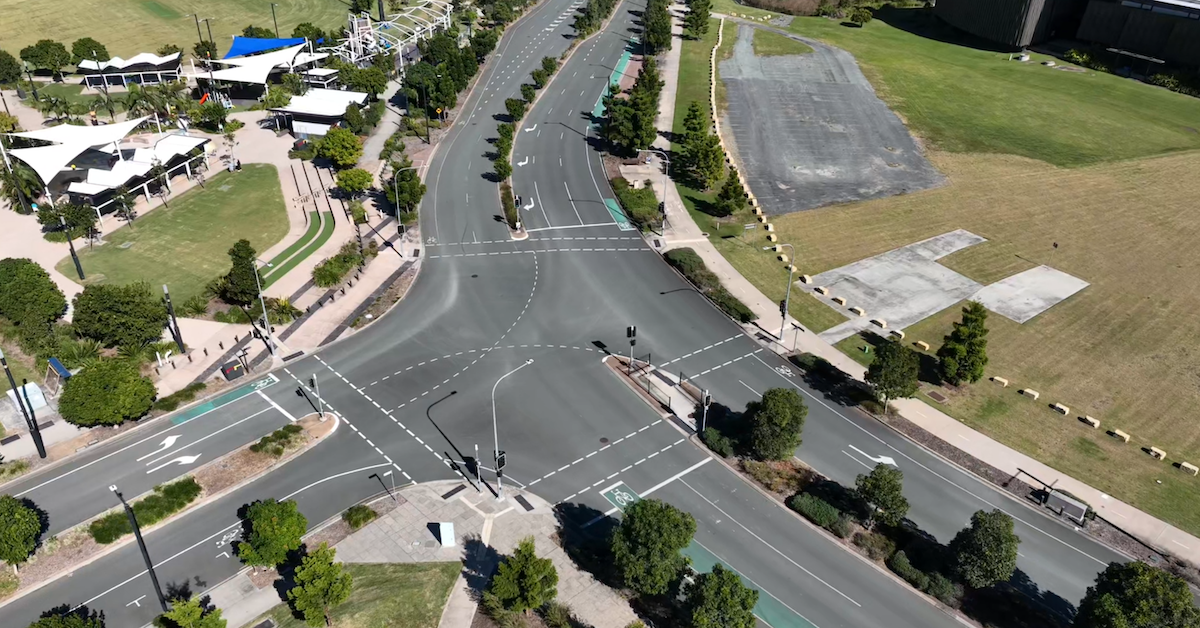
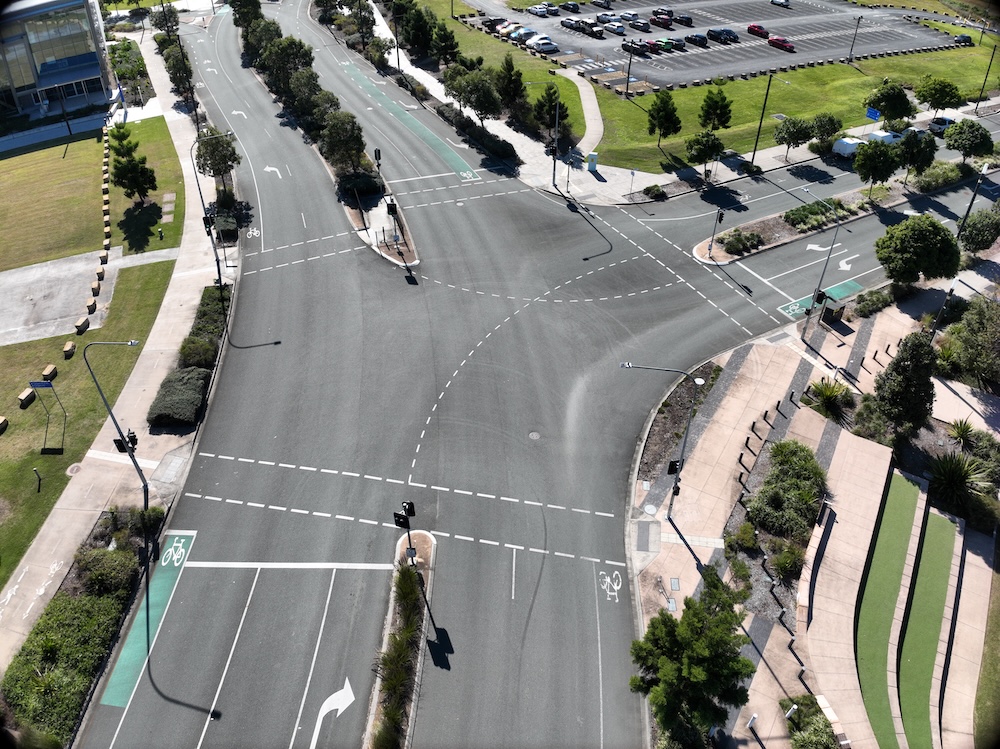
Drivers across Moreton Bay could soon spend less time waiting at red lights, with the City of Moreton Bay preparing to test an artificial intelligence-powered traffic signal system for the first time in Australia. The trial will take place at the intersection of Moreton Parade and Paper Avenue in Petrie.
By late 2026, existing traffic signal controllers will be replaced with next-generation hardware that works with the current in-ground vehicle detection system. The council will also install advanced traffic detection sensors to collect more detailed information about road users. These sensors can identify cars, trucks, cyclists and pedestrians, helping the system respond more accurately to changing traffic conditions.
The pilot aims to improve traffic flow by allowing traffic lights to respond to real-time conditions instead of following a fixed sequence. If successful, the technology could reduce delays at intersections, ease congestion and cut the time vehicles spend idling at red lights.
A decades-old traffic system gets a modern update
Australia’s long-standing traffic signal method uses a phase-based system dating back to the 1980s. Under this approach, traffic lights follow a set order, even as traffic volumes change throughout the day.
The new system uses a movement-based approach instead. It analyses vehicle movements in real time and adjusts signal timings to match current traffic conditions. The technology manages individual traffic movements without being tied to a fixed sequence or grouping of traffic lights, helping traffic move more efficiently through intersections.
According to the City of Moreton Bay, the system combines artificial intelligence with advanced traffic algorithms to support smoother traffic flow. It can also prioritise higher traffic volumes, including public transport, as traffic conditions change throughout the day.
Cutting unnecessary waits at empty intersections
One of the biggest changes for motorists could be shorter waits when an intersection is clear.
The technology is designed to reduce unnecessary delays created by traditional traffic signal timing. Council says it will also reduce the transition time between conflicting traffic movements, including the all-red interval when every direction is stopped, while maintaining safe operating margins. As a result, drivers may spend less time waiting when there is little or no cross traffic.
The City of Moreton Bay also expects the system to reduce vehicle emissions because cars will spend less time idling at intersections.
Mayor Peter Flannery said the City of Moreton Bay believed the trial had the potential to improve daily travel for residents by reducing unnecessary delays and managing traffic more efficiently. He also said the technology could better respond to changing traffic patterns throughout the day while maintaining safe operating margins.
If the pilot proves successful, the City of Moreton Bay plans to test the technology at a more complex intersection.
Published 6-July-2026